! SPOILER WARNING
Time to talk
INDISPENSABLE HOME ENTERTAINMENT
As NO TIME TO DIE — the final Daniel Craig Bond movie — hits homes everywhere, director Cary Joji Fukunaga and cinematographer Linus Sandgren walk us through its standout moments
[ EDITED BY CHRIS HEWITT]
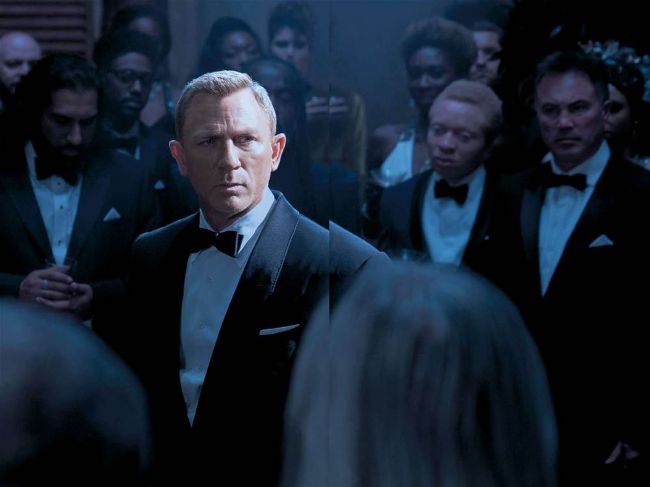
Daniel Craig dons the tux for the last time as James Bond.
“IT’S NICE THAT WE don’t have to talk in code anymore,” laughs Cary Joji Fukunaga, relaxing in a London hotel-room armchair. The reason for his relief: after months of radio silence following the release of No Time To Die — the 25th James Bond film, the fifth and final one to star Daniel Craig, and a movie that rewrites the Bond rulebook in ways ranging from subtle to seismic — the impending home-entertainment release has given the film’s co-writer/director licence to natter. And so Empire jumped at the chance to pump him, and his DP, Linus Sandgren, for information. Needless to say, spoilers follow, so be warned. This is for your eyes only.
FLASHBACK
No Time To Die isn’t the first Bond movie to open without 007 swanning around (Dr No and Live And Let Die’s opening sequences are also Bondless). But it’s the first to start with a flashback, in which we’re introduced to Dr Madeleine Swann (Léa Seydoux), Bond’s lover, as a young girl (at this age played by Coline Defaud), having a very fateful meeting with a masked man called Lyutsifer Safin (Rami Malek). “We debated different ways of starting off,” says Fukunaga.
“But that one just kept coming back. It’s a story that Madeleine tells Bond in Spectre, and I felt a lot of the beginning of this film was trying to resolve some of the story elements that are left unfinished in Spectre. Understanding her connection to Mr White, and Blofeld, and that whole SPECTRE world, and how that could play as part of a domino effect was important dramatic time that we needed to invest in.”
NO TIME TO DIE
Film proper underway, Bond and Madeleine find themselves in an ancient Italian town that plays host to the grave of Bond’s previous great love, Vesper Lynd. Encouraged to say goodbye to her once and for all, Bond does just that, attempting to bury the messy past for good. “You have to balance how much you reference from the past,” says Fukunaga. “All I wanted to reference there was that there had been someone in his past that had closed him off to the world, and Madeleine was the next-best chance to have a human life with somebody, and not just be a killing machine.” An interesting thing to note: after Bond is nearly blown up by a lurking SPECTRE bomb, the smooth camerawork switches to something more frenetic and immediate. “Whenever Bond is unstable, and we don’t know the outcome of a scene, we shot him handheld,” says Sandgren.