Sie sehen gerade die Germany Version der Website.
Möchten Sie zu Ihrer lokalen Seite wechseln?
15 MIN LESEZEIT

Life, books and arts

Present imperfect

Homeschooling parents are discovering how much time in class is taken up with educational jargon. When did the National Curriculum become so rigid?

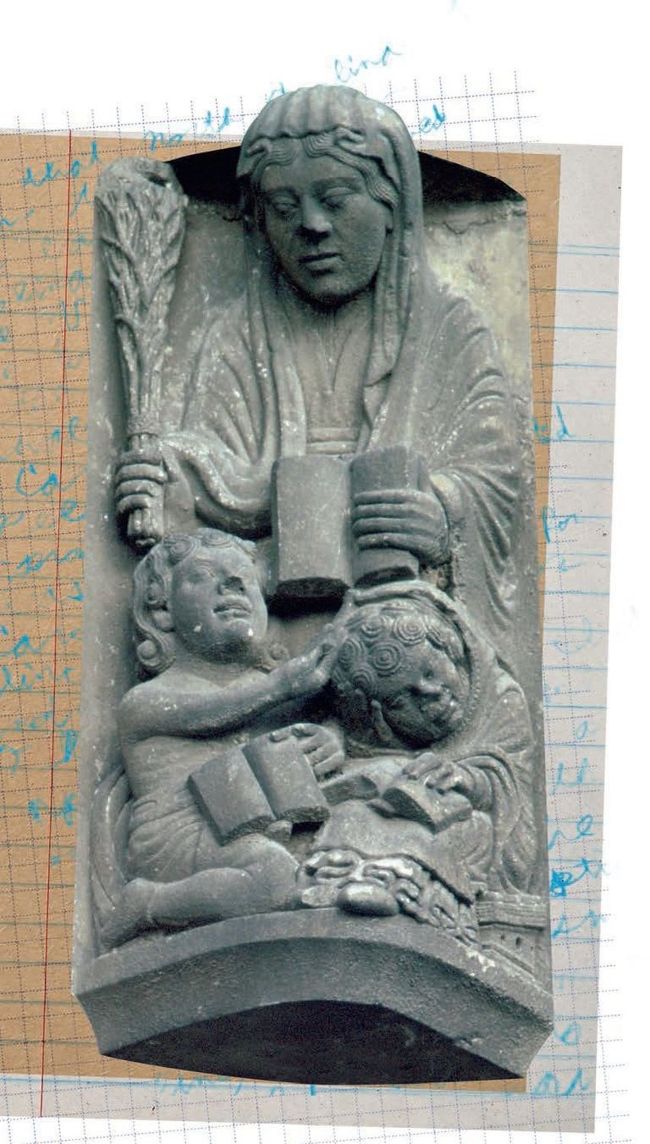
Previous page: A carving from Chartres Cathedral shows Dame Grammar threatening to beat her pupils with a bunch of twigs

In normal times, my cheery “So, how was school?” rarely receives more than a grunted “OK.” But homeschooling is revealing what my children actually do all day. And the discovery has come as a shock.

My 11-year-old son and eight-year-old daughter go to a perfectly decent state primary, which has valiantly provided worksheets week by week throughout our successive lockdowns. But I read them with incredulity, hilarity-and horror.

My daughter is told to improve her writing using “PUGS (Punctuation, Up-levelling, Grammar and Spelling).” (“Up-levelling,” I gather, means “improving.”) Meanwhile, she is left finding comprehension incomprehensible: “Use evidence from the text to justify your thinking!”-the exclamation mark failing to animate the task, which involves describing the appearance and personality of protagonists; or spotting expanded noun phrases. (I kid you not.)

Suspicious, I took out their old exercise books, which I’d shamefully only ever briefly glanced at in the holidays. At the top of each page is an “LI,” which, they informed me after some racking of brains, stands for “learning intention.” (Other schools use “learning objectives” or “WALT”

We Are Learning To…). When she was six and seven, my daughter was in the habit of writing her name followed by a row of hearts and kisses. Yet under that charming heading, she’d been made to scrawl such heart-sinking formulas as “LI: to practise inference skills”; “LI: to interpret a pictogram”; “LI: to work systematically to solve a problem”; and “LI: to identify features of a non-chronological report.”

Underneath the “LI” they have to paste in a checklist of “success criteria”: “I can add extra information to my sentence using a subordinate conjunction”; “I can use time adverbials”; “I can include technical vocabulary.” It was as if I’d booked a babysitter but a marketing manager had turned up instead.

The maths worksheets seemed more cogent, but the language was just as weirdly abstract-all tell, no show. “LI: to add using expanded column method”; “LI: to use inverse relationships to solve problems”; “Challenge: how many different division facts will you be able to write for the following statements? Explain your answer.” The wording reminded me of a poorly translated instruction manual.

When Michael Gove instituted a new national curriculum in 2014, the highly technical grammar foisted on primary pupils attracted some consternation (the secondary grammar curriculum is tiny by comparison). Six- and seven-yearolds are now expected to know prepositions, conjunctions and subordinate clauses; eight- and nine-year-olds, noun phrases expanded by the addition of modifying adjectives, preposition phrases, fronted adverbials and determiners; nine- and 10-year-olds, modal verbs and relative pronoun cohesion. I don’t even know what some of these terms mean, and I’ve got a PhD in English.

Lesen Sie den vollständigen Artikel und viele weitere in dieser Ausgabe von Prospect Magazine
Kaufoptionen unten
Wenn Sie die Ausgabe besitzen, Anmelden um den vollständigen Artikel jetzt zu lesen.
Digitale Einzelausgabe April 2021
 
€6,99 / issue
Diese Ausgabe und andere ältere Ausgaben sind nicht in einer neuen Abonnement. Das Abonnement enthält die letzte reguläre Ausgabe und die während des Abonnements erscheinenden neuen Ausgaben. Prospect Magazine
PRINT-ABONNEMENT? Erhältlich auf magazine.co.uk, den besten Zeitschriftenabonnement-Angeboten online.
 

Dieser Artikel stammt aus...


View Issues
Prospect Magazine
April 2021
ANSICHT IM LAGER

Andere Artikel in dieser Ausgabe


Prospect
Borderland
If you tried to explain to a Martian why countries
Letters
Your piece on the UK’s failures in managing the pandemic
Up front
Tax
You won’t repair a broken economy without taxing the rich more. This is how to do it, says James K Galbraith
QAnon
An unhinged conspiracy leapt from a wacky corner of the internet to the seat of democracy. Emily Lawford explains how
In fact
All the coronavirus in the world could fit inside a Coca-Cola can, with plenty of room to spare.
Open borders
Politics treats national boundaries as sacred. But let’s erase these arbitrary, vicious and divisive lines, argues Maya Goodfellow
Lawyers and their consciences
That everyone is entitled to legal advice is a proposition
Salvation by Banker
A new technocratic government will only deepen the crisis of Italian democracy, says Lucia Rubinelli
…And thanks for all the fish
What exactly does Britain’s “so long” to the European Union mean for the average fisherman, asks David McAllister
The Duel
Is the pandemic killing God?
Essays
Break-up Britain
All the lurking existential questions about the future of our kingdom are about to burst into the open
J’Accuse…!
How Emmanuel Macron is crushing the French liberalism he promised
RIP PLC
The rise and fall of the listed company, and where-for better or worse-private equity will lead business next
How is Brexit for you?
A couple of months after Britain finally took its great leap into the unknown, many businesses are still waiting to see where they will land. Others fear they have lost their footing for good
Island Apart
Brexit correspondent Lisa O’Carroll distils a few of the post-Brexit bumps facing individual British firms that she has investigated for the Guardian
We reap what we sow
Industrial farming has fed the world. But as it destroys our ecology, it runs into diminishing returns. Brexit Britain has a rare chance to rewrite the rules-but only if we can find the will to seize it
Facts on the ground
Israel may, for now, have backed off from the outright annexation of Palestinian land it has occupied for half a century. But it is burying any hope for a negotiated peace in concrete and tarmac
Critical thinking
Out of the cage
Filmmaker Adam Curtis says the tyranny of state control has led to the hollowing out of democracy
The myth of civilisation
Dividing the world into the civilised and the barbarians is no way to understand the appalling destruction of Palmyra
Pigeon
Most people will walk past these birds without a thought. But some of their abilities far outstrip our own, writes Cal Flyn
Electric dreams, revisited
Kazuo Ishiguro’s new novel is narrated by a robot companion who looks after a sick teenager. But the real drama is at the edge of the story, finds Miranda France
Back to basics
After decades of domination by free-market thinking, conservative parties are finding electoral success by emphasising stability and order, writes David Willetts
The mind of God
A new biography of Stephen Hawking argues the iconic physicist was shamelessly self-promoting and his reputation overrated, finds Philip Ball
Books in brief
Law in a Time of Crisis by Jonathan Sumption (Profile
Recommends
Academy of Ancient Music, West Road, Cambridge, 14th
Policy & Money
Economics and investment
Starting with the Dutch tulip mania of the 1630s, bubbles
Policy report: Trade
For a newly independent Britain, the challenges of international commerce now go beyond economics
And finally…
The generalist by Didymus
Last month’s solutions. Across: 1 Maenad, 4 Tripoli
Enigma & puzzles Strawberries and crime
Professor Neuron and his nephew Trifle have been out
Capital letters
The pandemic has unlocked the forgotten delights of the handwritten note
Brief encounter
Val McDermid, Author
Chat
X
Pocketmags Unterstützung