voices in food.
Asma Khan
Diana Henry meets...
How did a boisterous Indian girl with wild hair who didn’t know how to cook end up running a successful West End restaurant? Through hard work, a determination to break through barriers and a realisation that she could use her business to do good
The descriptor ‘a force of nature’ is bandied around liberally, but Asma Khan is the very embodiment of it. Energy thrums off her in waves – and it’s a positive energy, almost childlike in its optimism. And she can talk, with vigour and grace, for two hours and barely draw breath.
Her sister saw the fight in her early on. “When we were children, my sister would hold my hand and say, ‘You are going to be Jhansi ki Rani.’ She’s a hero in India, a princess who fought the British. ‘That is who you are,’ she said. ‘One day you will be known as a warrior princess.’”
This warrior princess became known for Darjeeling Express, an Indian restaurant in London staffed entirely by South Asian women, not ‘chefs’, but home cooks, some in their 60s. Asma refers to them often as ‘my women’ but not because she feels ownership, rather a sense of responsibility and care. In fact, she regards them as a kind of army – women showing other women what’s possible, marching to victory against the odds.
Darjeeling Express had been open for just nine months when Netflix asked Asma to be the subject of a documentary for its hit series Chef ’s Table. She was the first UK chef to be featured and the programme is a jewel (do watch it). Images from it have stayed with me – Asma standing pensively by the window of a train, the Indian countryside passing by – and so too have the stories, some painful to hear. There was cooking, including the making of the huge biryani for which Darjeeling Express became famous, but cooking, in some ways, was not the point.
“Energy thrums off Asma in waves — and it’s a positive energ y, almost childlike in its optimism… She loves food as much for its connection to a culture and people as for the physical pleasure of eating it”
DIANA
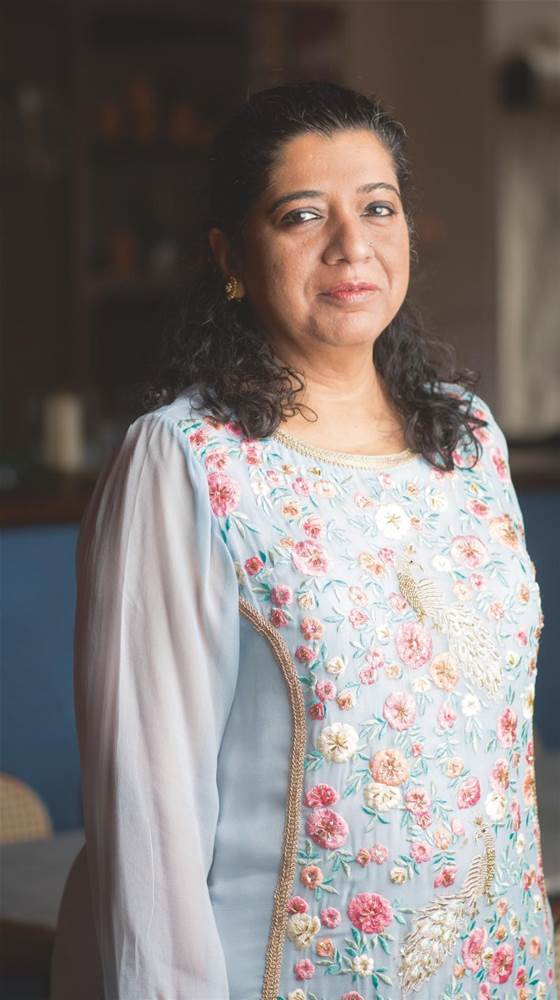
PORTRAITS: CHRIS TERRY, URSZULA SOLTYS
Asma loves food as much for its connection to a culture and people, mostly women – the conduits of recipes and skills – as for the physical pleasure of eating it. She’s furious that women in male-dominated restaurant kitchens are badly treated. Asma sees injustices – racism, sexism, ageism – everywhere, and she fights wherever she can. This could be because of her own experience. She is a ‘second daughter’.