MEAT KNOW-HOW
How to get the best out of good meat, from buying to cooking to serving
WHAT’S THE DIFFERENCE?
HAM & GAMMON
The simple answer is that gammon needs cooking before you eat it and ham doesn’t. After cooking, a gammon joint technically becomes a ham. Both use meat from the back leg of a pig – or the whole leg – which is dry-cured or brined in the same way as bacon. Often ingredients such as sugar and spices are added to give character to the cure. Gammon and ham are both available smoked or unsmoked.
Where things get complicated is that, while gammon is always raw, ham isn’t necessarily always cooked. Some hams – such as parma or serrano – are cured with salt, then air-dried for 6-24 months, during which time the meat firms up and the flavour matures. These hams, though uncooked, are fine to eat. In Italy they are known as prosciutto crudo – raw ham.
COOK’S TIP
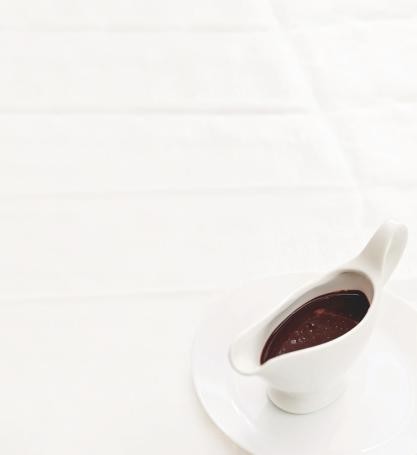
Gravy too thin? Add cornflour. Don’t add it directly to the gravy tin or it will go lumpy. Slake it first – mix 1 tbsp cornflour with 90ml cold water and stir until smooth. Whisk this slurry into the hot gravy, bring to the boil and simmer just long enough to thicken it and cook out any lumps. For more gravy tips see p62 of the December issue
WORDS: LUCAS HOLLWEG. PHOTOGRAPHS: ISTOCK
MASTER CLASS
CARVING GOOSE
It’s similar to carving a turkey
and it’s simple once you know
how. You’ll need a sharp knife
and a solid cutting board
• Before carving, let the goose rest in a warm place for about 30 minutes. This will make carving easier and ensure the flesh is deliciously juicy.
• Run a sharp knife through the skin where the leg meets the breast, then pull the leg back on itself to crack open the joint. Cut through the socket to remove the leg. Repeat on the other side. Set the legs aside.
• Cut around the wing, crack the joint and remove in a similar way. Repeat on the other side. The wings don’t have much meat, but they’re crisp and good for nibbling. If you’re not going to eat them, save them for making stock or gravy.
• You should now be left with the breasts attached to the carcass. Cut either side of the breastbone and use your fingers and a knife to gently prise each breast away from the carcass in one piece, keeping your knife angled towards the ribs to remove as much meat as possible.
• Take each leg and cut down flush with the thigh bone, then cut along the leg bone to release the large chunk of thigh meat. Cut the remaining meat from the other side of the drumstick. Carve the leg and thigh meat and put on a warmed serving platter.