PARMESAN
The wonder stuff
It’s a workaday ingredient, but are you aware of the months of care and attention that go into making a wheel of parmesan? Sue Quinn travelled to Parma to find out more – and our food team have created all-new recipes to celebrate Italy’s king of cheeses
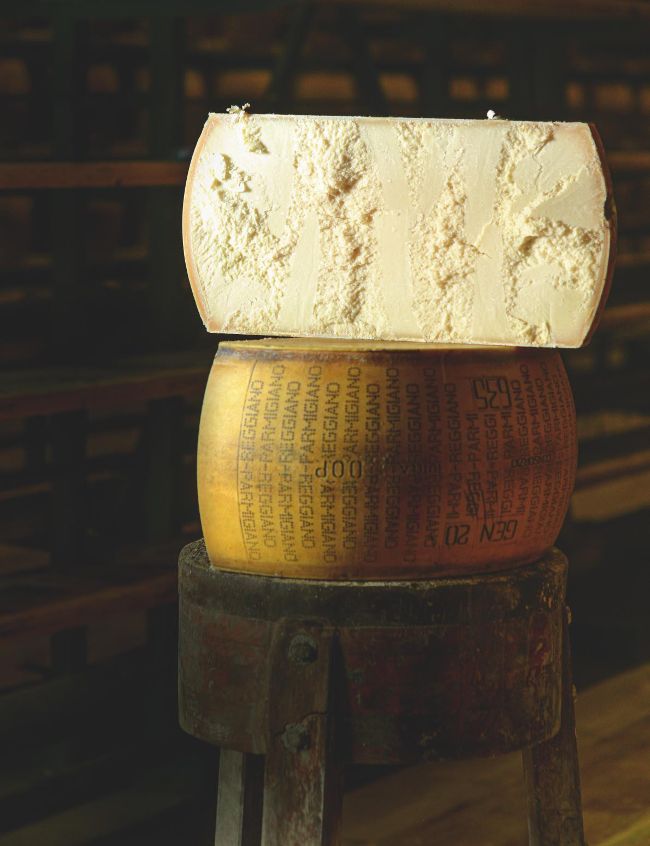
ISTOCK/GETTY IMAGES
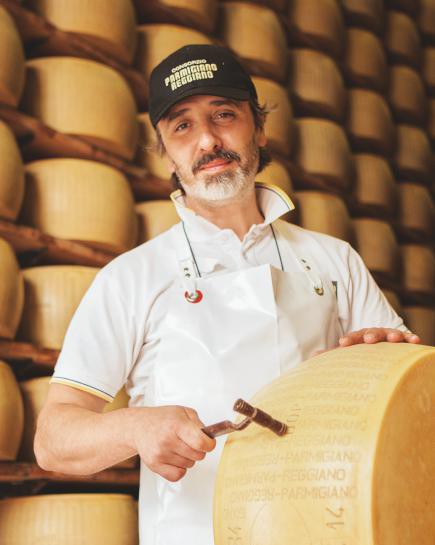
Parmesan maker Damiano Delfante taps a cheese with a brass hammer – he can tell its quality from the sound it makes
FEATURE PHOTOGRAPHS: GEORGIE HACKETT. RECIPES & FOOD STYLING: POLLYANNA COUPLAND. FOOD PHOTOGRAPHS: TOBY SCOTT. STYLING: TABITHA HAWKINS
Around the city of Parma in northern Italy, parmigiano reggiano is more than just cheese: it’s part of daily life. On average, the locals consume 500g each of the umami-rich stuff every week. “We put parmigiano reggiano in almost everything,” Maria Chiara Passani from the Parmigiano Reggiano Consortium (PRC) tells me. “We use it like salt. It’s in our DNA.”
But parmesan producers have had it tough in the past 10 years. An earthquake, recession, Covid and a series of audacious parmesan robberies (the 40kg wheels of cheese are worth around €700 each) have troubled producers. And now there’s another growing problem: counterfeit parmesan.
The name parmigiano reggiano is protected under EU law, which means it can only be used for cheese made to the exacting standards demanded by the PRC. But outside Europe, cheap imitations can legally be labelled ‘parmesan’ – in one case a US version was found to contain wood shavings. “We estimate the total value of counterfeit cheese sold as almost that of the real thing,” says the PRC’s Igina Morinia. The counterfeit stuff is sold at much lower prices, too, so the total amount sold is more than the real stuff. Igina adds that millions of Euros will be spent this year tackling the problem (they are currently trialling putting microchips into the wheels so they can be identified as genuine cheeses).