Do grannies teach anyone
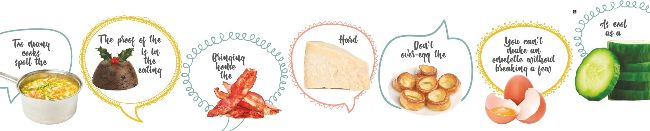
‘Hard cheese,’ ‘Don’t over-egg the pudding…’ There’s a larder’s worth of food-related expressions in the English language. But what do they really mean – and where did they come from? Neil Davey gets to the meat of the matter
to suck eggs?
PHOTOGRAPHS AND ILLUSTRATIONS: ISTOCK
1 TEACHING YOUR GRANNY TO SUCK EGGS
We all know what it means: don’t offer advice to someone who has more experience than you do – and most of us have said it. The one thing we’ve never done? Question it. After all, when was the last time you saw anyone – grandparent or otherwise – suck an egg? As you’d imagine, the phrase is an old one, dating back to at least 1707, when the expression “You would have me teach my Grandame to suck Eggs” appeared in John Stevens’ translation of The Comical Works of Don Francisco de Quevedo, a Spanish writer.
2 TOO MANY COOKS SPOIL THE BROTH
Directly contradicting that other expression about many hands making light work, the notion that an excess of people involved does not lead to a satisfactory conclusion has popped up over the course of centuries. The earliest printed example appears to date back to 1575 and The Life of Sir Peter Carew, John Hooker’s biography about his adventurer friend, in which it’s phrased as, “The more cooks, the worse potage”.