Camera College
The complete guide to modern photography
Marcus Hawkins
SPONSORED BY AFFINITY Photo
Photographer and writer Marcus is a former editor of DigitalCamera
Photo challenge!
You could win a copy of Affinity Photo
See page 75
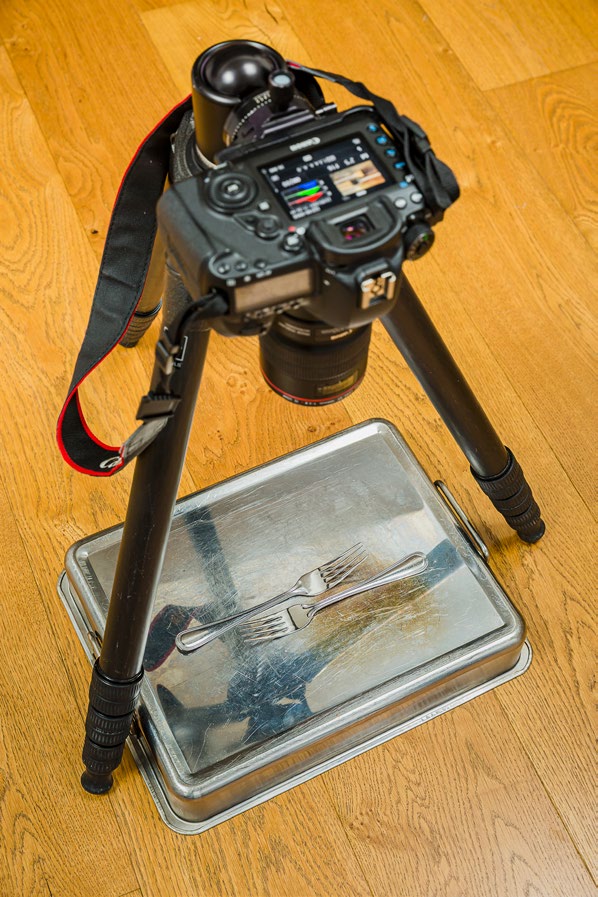
You can shoot a still-life anywhere. Here, the battered back of a roasting tray placed near a kitchen window makes for an easy ‘home studio’.
How to get started in still-life photography
Interesting, arresting, thought-provoking, fun… the still-life genre offers plenty of scope for exploring the art and craft of photography
■Still-life photography is the great leveller. While other genres of photography may require specific kit (you won’t get too far in wildlife photography without a telephoto lens, for example), you can essentially use any equipment to shoot a still-life. The big investment comes in the form of time in terms of how long it takes to come up with a concept in the first place, and the time required to refine the composition and lighting.
Modern still-life photography has become a broad church, encompassing everything from classic Renaissance paintingstyle arrangements of fruit and flowers to contemporary minimalism and quirky, humorous set-pieces. And the range of visual styles employed in the genre is just as rich and varied, with black-and-white and vintage treatments rubbing shoulders with vibrantly coloured works and glossy product photography. Where things can get really interesting is when still-life photography gets conceptual and symbolic and thoughtprovoking. Being able to illustrate an idea or a point of view through inanimate objects, and in turn make viewers dig a bit deeper, is quite a skill. Take a look at the ‘Last Meal on Death Row’ photographs by Mat Collishaw, for example, or the (also food-themed) work of Henry Hargreaves.
While finding a theme can provide a solid foundation for a still-life body of work, being able to pull it together photographically is key. The good news is that the relatively slow-paced nature of still-life photography means there’s plenty of time to work on framing, composition and exposure.
What kit do you need?
A standard zoom or macro lens will give you lots of options
■The beauty of still-life photography is that you don’t need much kit at all: any camera and almost any lens can be put to good work. You don’t need a great deal of space either. Having room to set up a tripod is going to help, as it will allow you to frame your still-life set-up with precision, as well as enable you to use the optimum camera settings.
A different selection of backgrounds will prove useful. For tabletop set-ups, a sheet of white card and some black velvet are going to be well-used assets, but backdrops with more vibrant colours and those with interesting textures can also come in handy.
A reflector or two is good to have around – you don’t need anything fancy, as a couple of sheets of white card or foamboard will be fine – and a flashgun or affordable LED light will allow you to carry on shooting into the evening.