Camera College
The complete guide to modern photography

Marcus Hawkins Photographer and writer Marcus is a former editor of Digital Camera
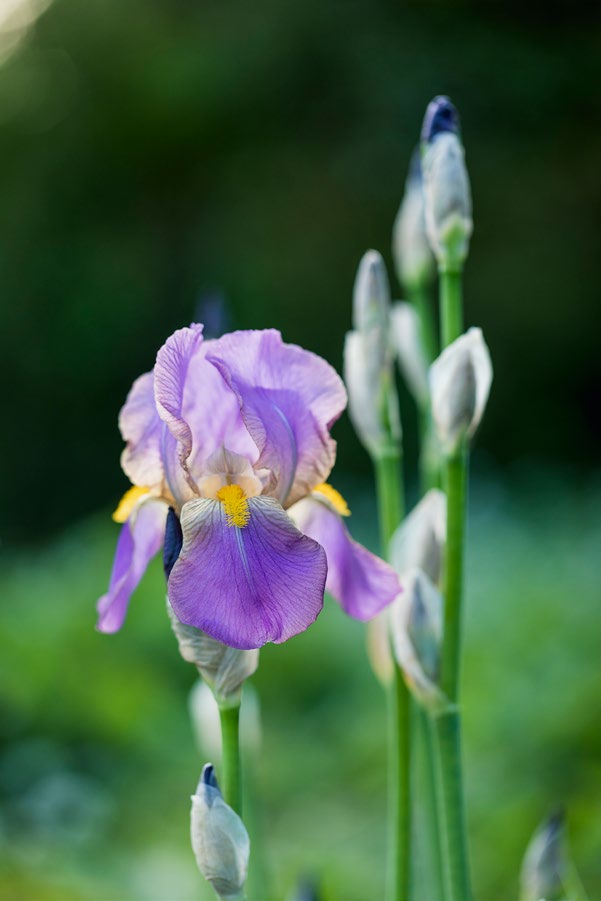
Natural frames can be used to accentuate a flower, but avoid the horizon or a line of contrast (above) running directly behind the subject.
Full light background
Full darker background
Capture the power of flowers this summer
It’s the perfect time of year to get down and dirty, and explore the private life of flowering plants in close-up detail. Here’s a guide to getting started…
Flower photography can be a truly rewarding pursuit. As long as it’s not windy. And the lighting is soft, distinctive and characterful. And you’ve caught the blooms at their peak moment, with petals intact and pollen in place. I’m joking, of course – apart from about the wind, which is the bane of all flower photography – but when all those elements come together, it’s a fantastic way to spend some quality time with your camera. As with autumn photography, you’ll need to seize opportunities as they arrive, as once insects and extreme weather have done their work, a flower will soon look past its best.
A lens that allows you to focus closely is going to be an asset, but you don’t necessarily need a full-blown 1:1 macro lens unless the flowers that you’re photographing are small, or you want to capture detail shots. Many lenses come with a ‘macro’ function that allows you to focus at relatively close distances, although you won’t get the life-size or half-life-size reproduction of a macro lens. I tend to use a 100mm macro lens just because it’s the only close-focusing lens that I own, and it provides that all-round coverage – from tight floral portraits to details to photos of flower beds. But it’s not a lens that I routinely use to shoot life-size images all of the time.
A tripod comes in handy for close-ups, but it requires a slow and steady approach if you’re to avoid damaging other plants and risking the wrath of the formerly friendly gardener in your life (I’m speaking from experience here). Size up the subject with a handheld camera before you set up the legs, paying close attention to what’s in the background of your shot – gardens are rarely designed with the needs of photographers in mind, and are notorious for their distractions. Colourful pots, bright flowers and pale stones will all draw the eye from the subject, so be prepared to do some ‘gardening’ around your subject. Plant clamps and other macro supports that feature a spike at the base and a soft-grip clamp on an arm at the top can be used to hold vegetation out of the way, or stabilise tall and thin-stemmed flowers without damaging them.
Framing up flowers like a pro
How to clean up your floral compositions
Choosing a good angle for a flower shot will depend on the subject’s shape. Flat blooms that open up to the sun typically suit a top-down approach, while flowers that are pendulous or born on spikes tend to look better when shot from the side. But there are no hard and fast rules and it’s worth trying a range of different angles.
As with portraits of fauna, avoiding distractions in the background of a floral photo will allow viewers to focus fully on the subject. Distractions down there among the vegetation comes in many forms, from criss-crossed blades of grass to an out-of-focus horizon that runs right across the image. It’s often a problem when you’re shooting side-on to a flower, but even shooting from above can pull in unwanted elements, such as patches of bare earth. Your camera’s large rear screen makes it easier to spot distractions than in the viewfinder.