Photo Answers
Sketchy about shutter speeds? Disoriented by dynamic range? Send your technique and camera questions to digitalcamera@futurenet.com
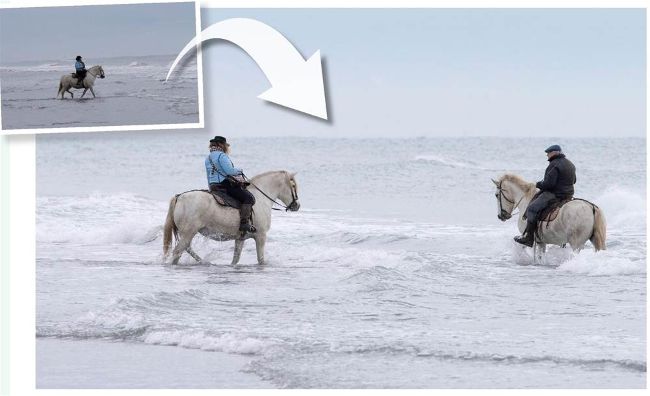
See how much difference a little bit of exposure compensation can make.
Correcting a dark exposure
Andrew James
Andrew James
Andrew is a highly experienced writer and photographer – if you have a problem, he is here to help.
Q As a newbie to photography, having just bought a second-hand Canon DSLR, I’m struggling with exposure. I shoot in Aperture Priority mode and while I get it right sometimes, more often than not the exposure is darker than I think it should be. How can I correct this?
Bonnie Moffat
A You’re doing nothing wrong, Bonnie, but your camera’s metering system isn’t always giving you the result you want. To some degree, exposure is also subjective, and it could be that your creative vision wants your images as light as they can be within the camera’s dynamic range. Stick with Aperture Priority mode, then make sure you are using your camera’s average metering mode – it’ll be Evaluative or Matrix, depending on the model. While this isn’t necessarily always the best metering mode, it will give you more consistent results.
What you need to do is start recognising scenes that will trick the camera into underexposing. Typically, these will be backlit scenes or ones made up mainly of lighter tones. You should look at the Histogram for these types of images and, if the tones are mainly to the left and middle, with a big gap on the right, you need to add some exposure compensation to brighten it. It may not need more than +two-thirds of a stop, but even this can make a difference.
On the image of the horse and rider in the water, you can see the predominance of brighter tones in the scene means the exposure, as given by the camera, is slightly dark. As there is no big hotspot area of brightness within the frame, it only needed +two-thirds of a stop to give the exposure a lift in the next image taken a few moments later. In this frame, the highlights are crisper, there is more detail visible, and the image is still within the camera’s dynamic range.