SHOOT LIKE A PR
STREET WISE
Peter Fenech explores historical Bath with Alistair Campbell to discover the essentials of street photography
Alistair Campbell
As the technique editor for our sister magazine Digital Camera, Alistair writes about a huge range of photographic topics on a daily basis, however, candid street photography is one of his personal passions.
Having previously worked as a freelance photographer, his knowledge of using locations to their full potential has armed him with the practical skills to find subject matter in the most unlikely of scenarios.
To see more of his work, including his fashion portraiture, find him on Instagram.
@alistaircampbellphoto
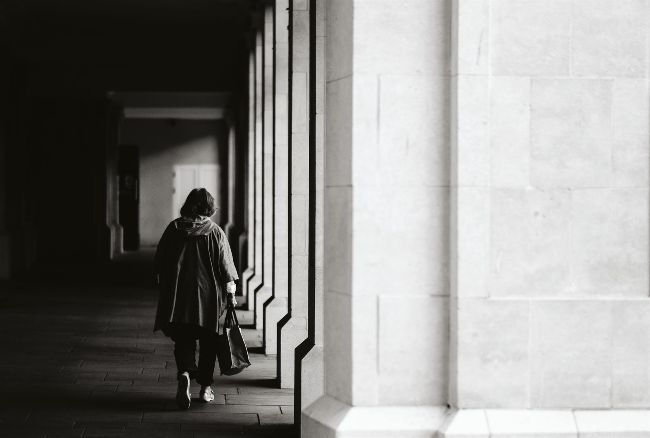
© Alistair Campbell
Street photography has a unique historical association within the art world. Some of the most well-respected names in the medium created their legacies by capturing people and places on the street, documenting a snapshot of the decades in which they worked. Names such as Henri Cartier- Bresson, Vivian Maier, Elliot Erwitt and Helen Levitt are synonymous with 20th Century street photography and the unique style of capturing the world they pioneered.
While certain concepts that these artists generated have endured, none more so than Cartier- Bresson’s ‘decisive moment’, many photographers working today can have difficulty interpreting their ideas in a modern context. Digital photography has revolutionised the way photographers view and capture the world around them, meaning we must use historical inspiration with care if we are to get the most from our time and modern equipment.
I’m keen to explore the genre of street photography through the eyes of a contemporary artist. As such, I am in the picturesque city of Bath Spa, in Somerset to meet Alistair Campbell for a photowalk. Armed with his Fujifilm cameras, an X-T2 and an X-100V compact, we set off in search of engaging subject matter.
I ask Alistair what he looks for in a subject and the elements he aims to find first when hunting for the perfect street composition. “I look for people first and then the background,” he says. “Of course, you can’t always find the perfect background but, sometimes, I’ll set up and wait for a good subject to walk into the scene. If you focus on people it doesn’t really matter where you shoot in terms of location.”