BLACK CORAL RE-CREATING DANGER
Re-creating danger can be almost as risky as the real thing, and that means more than just cut fingers, says filmmaker BRETT WINN, producer of a documentary film that gets under the skin of black-coral divers
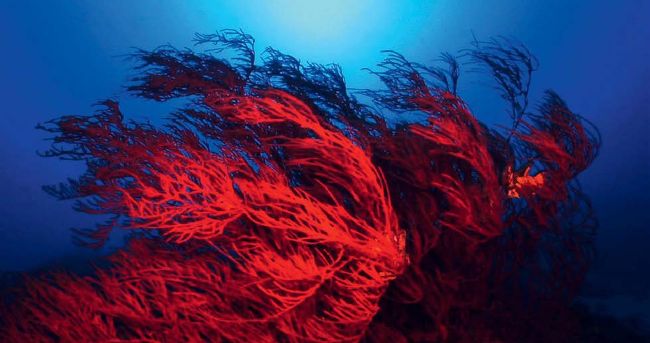
Black coral.
WHEN WE SET OUT to make the film Black Coral, neither I nor my brother, the director, were dive-certified. We had been pitched on the idea of going out to Maui and filming an elite group of divers whose stories involved the beauty of the deep ocean, diving to insane depths, and the curious addiction they felt for coral-diving.
We wanted the film to be about the divers and, unlike most documentaries, to be entirely in their own words.
We knew it would be far less impactful simply to show talking heads for the entire runtime, so we decided to re-create as many of their stories as best we could.
We had no idea what was coming our way. It turns out that trying to safely recreate inherently unsafe situations in an environment in which fundamental things like breathing are not guaranteed sometimes creates difficulties and dangers all on its own.
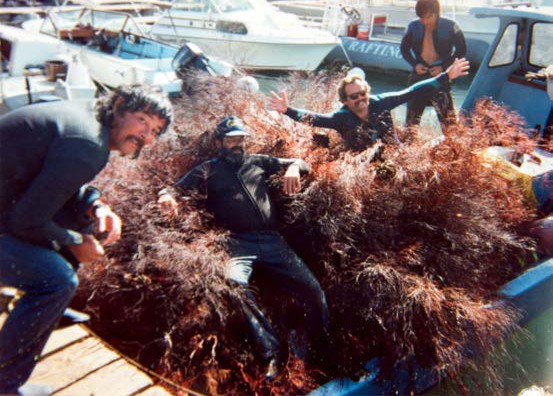
Black-coral divers in their heyday.
Invariably people ask about certain shots, such as one in which a tiger shark swims right up to the diver, wondering how we managed to get it.
In actuality these scenes are among the least technical, least complicated in the film. Most of them are composites of two or more shots blended together.
The real challenges of recreating dramatic and often dangerous moments under water are often the things least likely to be noticed by a casual viewer.