KARATEKA
Gold standard
The Making Of Karateka sets a new high watermark for commemorating classic games
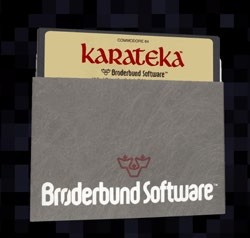
The attention to detail extends to the inclusion of a rendered version of the original 5.25” floppy disk, nestled in its slipcase
BELONGING IN A MUSEUM
It’s striking how gamelike The Making Of Karateka feels: you are free to ignore the timeline chronology to skip to the parts that most interest you, while a chime sounds when you’ve viewed a timeline node, a familiar type of interactive reward. “You have to have that control in your hands,” Kohler nods. “Like a museum wouldn’t put you on a moving walkway and have you stuck there. If something catches your eye, nobody’s stopping you from just walking right up to it. What we have to do, like a museum, is make sure you get some takeaway, whether you rush through or read the label on every [exhibit].”
Jordan Mechner wasn’t even 21 when his debut game launched on Apple II in December 1984. By February 1985, his Kurosawa-inspired martial-arts adventure Karateka had entered the Billboard computer-game top 20 – eventually reaching the top spot in May – while Mechner was still an undergraduate at Yale. Its rise to the peak, he noted in his diary, had coincided with Crazy For You usurping We Are The World on Billboard’s music charts. “Me and Madonna,” the entry read. “Yow.”