TOKYO DRIFTERS
Can the final stronghold of the videogame arcade survive the pandemic’s ravages?
By Simon Parkin
Key photography Liam Wong
FOR WESTERNERS WHO LONGED TO AGAIN EXPERIENCE THESE SINGULAR PLEASURES, TOKYO’S ARCADES BECAME A MECCA
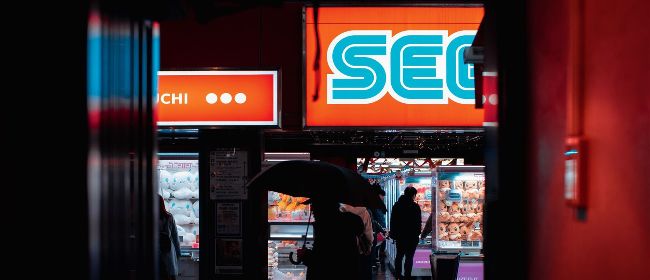
When Sega’s iconic, nine-storey videogame arcade in Tokyo’s Ikebukuro district closed its doors for the final time on September 20, 2021, teary staff members wore T-shirts bearing the slogan: “Thank you for 28 years”. Through tinny loudspeakers, the tune ‘Hotaru no Hikari’ (The Light Of The Firefly) – aswansong often played to mark the closure of a popular Japanese store – mingled with the sound of impatient car horns and clipping heels on the pavement outside. The site manager addressed the gathered crowd of patrons, their heads bowed as if stood at a graveside. “If it were in my power,” he said mournfully, “I’d want to stay open forever. Unfortunately, at this time, the way it turned out… the arcade has closed.”
Throughout the 1980s and ’90s, arcades were where people went to experience the future of videogames: visions beamed from high-tech machines built with innovative components exceeding anything found in the home. Consumer versions of arcade games were pale reflections; to experience Sega Rally or After Burner as the creators intended, you would have to head outside to embark on a minor pilgrimage. Arcades felt vaguely illicit – places of truancy, delinquency or, at very least, stale cigarette smoke. In Invasion Of The Space Invader, his 1982 survey of New York’s arcades, the novelist Martin Amis provided an anthropological survey of the arcadegoer: “zonked glueys, swearing skinheads […] seven-foot black kids on roller-skates […] ten-year-old trogs […] hip Madison Avenue ad-execs and MIT whizzkids, enjoying their coked-up coffee breaks”. But it was here, too, that the misfits found community and belonging – as well as a proving ground for an emergent kind of digital athlete.
Time passed. The lowering cost of components and the rise of the Internet drew innovative technologies and virtual communities back into the home, away from public spaces. Around the world, arcades began to close, making way for more profitable, less exciting tenants.
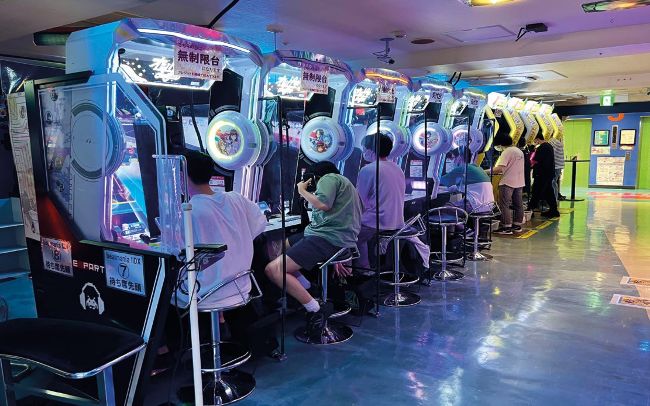
Rhythm-action games remain popular in Japanese arcades, where Konami’s Bemani line has maintained a strong presence for more than 20 years, despite the genre having long fallen out of fashion in the west
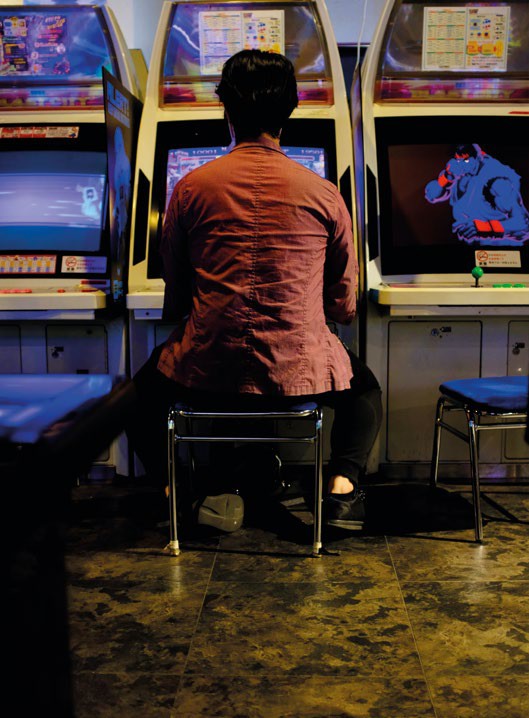
Japanese fighting-game players prefer back-toback cabinets, where opponents are out of view
In Japan, the game centre – as arcades are commonly known in the region – has persisted longer, though in an undeniable state of decline: the number of arcades dropped from a peak of 51,520 to 13,013 by 2017, according to The Japan Times.
Enough punters, though, were drawn to the jangling bustle, the opportunity to sit down next to a stranger and engage in the intimacy of physical competition, for a conspicuous core to survive. For western videogame fans who longed to again experience these singular pleasures, Tokyo’s resilient arcades became a mecca. They came for the
Simon Parkin unmatched joy of recording a new high score on a physical machine, those three initials somewhere between a graffiti tag and commemorative plaque. For the thrill of watching a virtuoso player at work, not via disembodied Twitch streams, but from right over their shoulder.
The COVID-19 pandemic put an end to that. The Japanese government encouraged locked-down patrons to remain in their homes, away from the tactile temptation of fingerprint-smudged sticks and buttons. As the country closed its borders, the tourism trade on which many of Tokyo’s arcades had come to rely vanished. The waterfall of hundredyen coins that for four decades has flowed into the industry froze. In the city centre, where rents, according to one source, can reach a hundred thousand dollars a month, many businesses became instantly unsustainable.
In 2021, Sega – which first entered the coin-op business during the Second World War – sold 85 per cent of its shares in arcades. In January this year, the company sold the remaining 15 percent. JAEPO, the Japan Amusement Expo, has halved in size in the past two years. Today, an industry that has sat at the heart of Japanese public entertainment since the ’80s appears to be in its death throes. Though it no longer operates venues, Sega is one of the very few traditional Japanese players still designing and releasing conventional arcade games in the territory. With the industry reaching a precipice, though, it may not be long before these machines have no place in the domestic market, and the region loses the last bastions of public space dedicated to digital forms of play.