OVER AND OVER AND OVER
Creators at the forefront of the Roguelike genre chart a course for a bright future
By Jon Bailes
Derek Yu is amazed by the variation in Roguelike games which has emerged in recent years, and the versatility of the format it revealed. “It’s kind of like finding a hundred new ways to use toothpaste,” he says. “It’s proven itself to be a design framework that’s extremely flexible and broad, which is surprising, given that traditional Roguelikes were so strictly defined in a lot of ways.”
The Spelunky creator can survey the Roguelike boom from his position as one of its trailblazers. Perhaps more than any other game, his baby popularised the notion that Roguelike elements could be freed from turn-based dungeons and applied to any genre. “It’s been awesome to see how far things have come since the release of Spelunky Classic in 2008 –I never would have imagined that ten years later I’d be releasing Spelunky 2 alongside all these other cool Roguelike games!”
LIKE WISE
Discussing Roguelikes is always a little awkward due to the vague terminology.
Is Roguelike a genre, a structure? When does a Roguelike become a Roguelite? With so many leading lights on hand, this seems like the ideal opportunity to clear things up. Or not.
“Honestly I think the terms get a little silly and I am too busy making the game to care too much,” Sigman says. “In our marketing we tend to refer to [Darkest Dungeon] as a Roguelike because it gets the basic point across and nobody wants to read a hype paragraph that has asterisks and disclaimers about terminology.”
Yu seems content to go with the flow. “I’ve been calling Spelunkya ‘platform Roguelike’ or an ‘action-Roguelike’ because I wanted to help the turn-based, dungeon-crawling Roguelikes keep their label,” he says. “But it’s feeling like a futile battle, so yeah, these days I’d consider Spelunky to be a Roguelike and [something like] NetHack to be a traditional Roguelike.”
As for ‘Rogue-lite’, who better to ask than Lee, since it was Rogue Legacy that popularised the label in the first place? “We coined the term Rogue-lite back when Rogue Legacy came out as a cheeky way to explain that our game had permanency and it kind of stuck, before being retroactively applied to other games like Isaac and Spelunky,” he tells us. “Personally, I don’t actually know what people think the difference between a Roguelike and Rogue-lite is.”
Conclusion: it’s faithful to the modern Roguelike spirit to embrace fluidity.
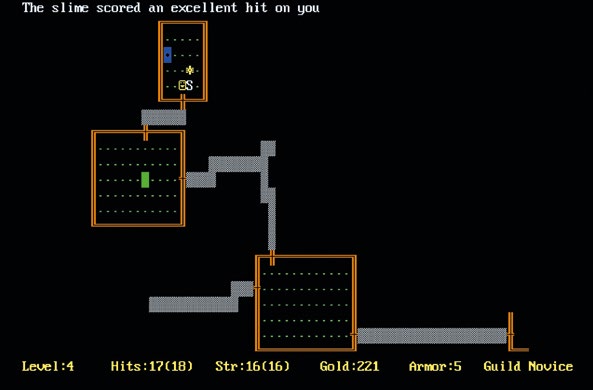
Where it all began, in 1980, hunting for the lost Amulet of Yendor in an intricate, procedurally generated dungeon. The legacy of Rogue now spans 40 years
It’s a decade that has seen the genre staples of permadeath and procedural generation repeatedly excavated and smelted down for general use. Search for ‘Roguelike’ on Steam and you’ll pull up over 1,000 full games, with more than 300 of those released last year. This year we can expect everything from RPGs and deckbuilders to twin-stick shooters, brawlers and any number of action platformers sporting the Roguelike tag. For Yu and others returning to the fray with sequels to their classics, it’s a very different and rapidly evolving landscape. It’s true what Spelunky says: the walls are shifting.