SPACE ODDITY
How Capcom's unique sci-fi shooter is delivering on promises made long ago
BY NIALL O'DONOGHUE
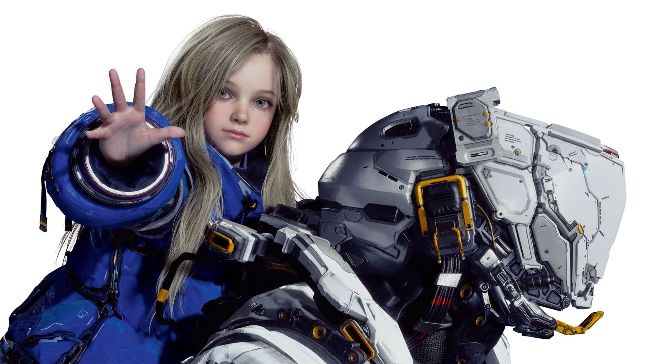
I While lunafilament is used to build cities and heal wounds, its use cases are varied: as a Pragmata, Diana was created using the mysterious substance
REM CYCLE
We find few signs of life as we explore, making our discovery of the crew’s quarters feel all the more incongruous. In the midst of the sterile space station is an enclave of humanity, packed with creature comforts such as a TV screen and comfortable furniture, all generated using a Read Earth Memory chip, a device used to 3D-print familiar objects. “It was developed on the lunar research station to provide comfort and a connection to Earth for crew members living far from home,” Yonghee says. Beyond satisfying our curiosity, he teases that discovering more of these chips may benefit us in other ways.
Few things are quite as intriguing as a delayed project. As hype builds for long-awaited games such as Silksong and Grand Theft Auto VI, it’s hard to resist the temptation to comb over trailers and screenshots, piecing together clues in an attempt to guess what the final production will look like. Capcom has had us on the hook for five years now, ever since it released the first trailer for Pragmata, giving us a brief but tantalising window into its futuristic world. Clearly an awful lot has happened since then, including a global pandemic, the rise of generative AI and the launch of a new console generation, to name just a handful of events. Through all of this, the release date for Pragmata has been pushed back ever further, with no signs of life provided by Capcom since it was indefinitely delayed in 2023. Plenty of time, then, in which our imaginations could run wild. As we fire up a demo at this year’s Summer Game Fest, though, our preconceived notions fade away. The reality, it turns out, is far more interesting than anything we could have come up with.
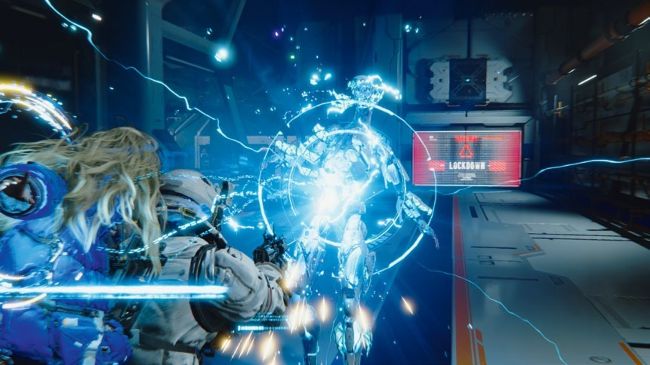
Game Pragmata Developer/publisher Capcom Format PC, PS5, Xbox Series Release TBA
The contrast between our protagonists is striking. Systems auditor Hugh Williams cuts an imposing figure in his white space suit, kitted out with industrial gear in the manner of Isaac Clarke. The young girl accompanying him is tiny in comparison, a waifish figure with long blonde hair and bright blue eyes matching the colour of her oversized coat. In a trailer, she excitedly introduces herself as a Pragmata, a type of android, named D-I-0336-7. “Look,” a wryly amused Williams replies, “how about we call you Diana?” Williams immediately occupies a position akin to a father figure for Diana, recalling the adventures of Kratos and Atreus. “While he’s a kind person, he often speaks his mind,” producer Naoto Oyama says, noting the counterpoint that Diana provides to Williams’ stoic disposition. “She’s naturally curious, and has an exceptional ability to learn from her environment. Due to her limited data accumulation, she often reacts with childlike innocence.”