GODS AMONG US
CATE BLANCHETT
The powerhouse who finds strength in unlikely places
In our regular series, we pay tribute to the towering, mega-watt stars who still roam Hollywood
WORDS BETH WEBB
STANLEY KUBRICK’S ASSISTANT Leon Vitali was one of the first people to discover the raw power of Cate Blanchett’s vocal cords. The director died before post-production on his 1999 swansong Eyes Wide Shut was complete, but had left distinct instructions for a voice that needed to be dubbed over a key character during the pivotal orgy sequence.
Having gatecrashed the sinister event, Tom Cruise’s Dr Bill is taken aside by a masked woman who warns him he’s in danger and must leave. The latter performance needed a more specific vocal replacement. “We wanted something warm and sensual but that at the same time could be a part of a ritual,”
Vitali told Vulture in 2019. What Blanchett achieved, Vitali was sure, would have met the demands of one of cinema’s most exacting directors. But it also provided an urgency and potency that, when listening back today, can only belong to her.
Blanchett’s voice has formidable powers. It’s low in register, richly theatrical and a little earthy, and whether it’s warning Tom Cruise away from an orgy, rallying the British troops to face the Spanish Armada in Elizabeth or chewing on a meaty monologue about change at the start of The Fellowship Of The Ring, it announces Blanchett as an innate force, demanding attention even when she’s not physically present.
It comes from a strength of character that shines through in her work. She has barely hit a dud note since her international, multi-awardwinning breakthrough as Queen Elizabeth I in Shekhar Kapur’s 1998 biopic. There has been no call for a renaissance, no movie-jail time, and no typecasting: just a remarkable, singular career as one of the most commanding screen presences of the past 20 years, who can take any film, from an interpretive Bob Dylan biopic to a Marvel action-comedy, and mercilessly steal scenes.
She has no time, though, for obvious, clichéd definitions of strong female characters.
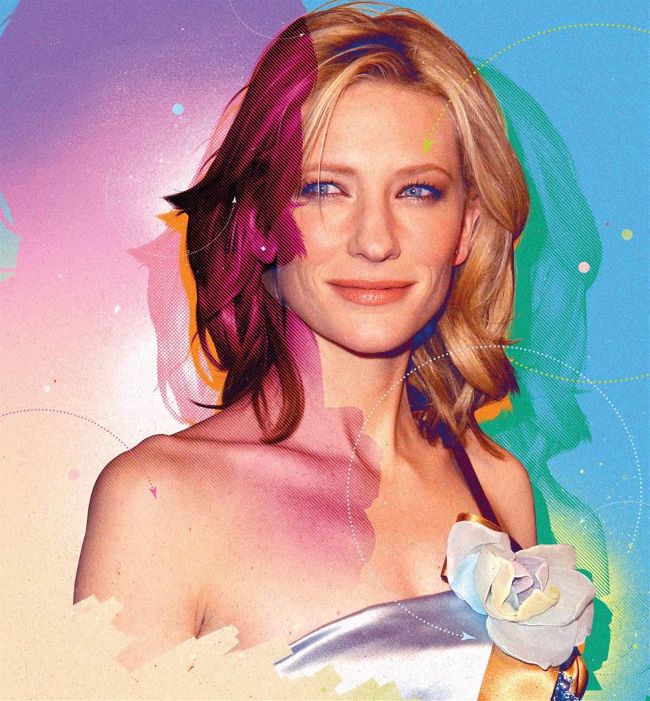
ILLUSTRATION CHRISTOPHER LEE LYONS
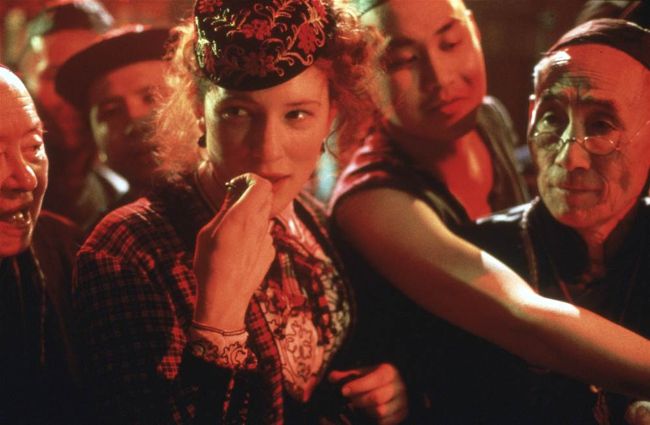
As the titular gambling heiress in Oscar And Lucinda (1997).
“I’m so sick of hearing, ‘You’re a strong woman, you are an inspiration in this, or that,’” she told Reader’s Digest in 2021, following their suggestion that this is what she is. “What exactly is the definition of that? What makes a woman strong, other than being able to lift a couple kilos? It’s a very glib, overused expression and I don’t really like it.” Instead, Blanchett is redefining strength through her presence and power — no matter how flawed her characters might be.
BLANCHETT’S APPETITE FOR robust, resilient characters traces back to her formative years in a hard-working matriarchal household in a Melbourne suburb. Her father —a John Wayne fan who would play his movies in their home on Sundays — died of a heart attack aged 40, when she was ten. Her grandmother moved in to help out while her mother took two jobs to support Blanchett and her siblings, an example of self-reliance that later inspired Blanchett to get work early herself.