Fighting Talk
FOR DECADES, TWO GOSSIP COL UMNISTS RULED HOLLYWOOD, TERRORISING ACTORS, STUDIOS AND EACH OTHER. WE PAY TRIBUTE TO ACIDIC RIVALS LOUELLA PARSONS & HEDDA HOPPER
WORDS HELEN O’HARA
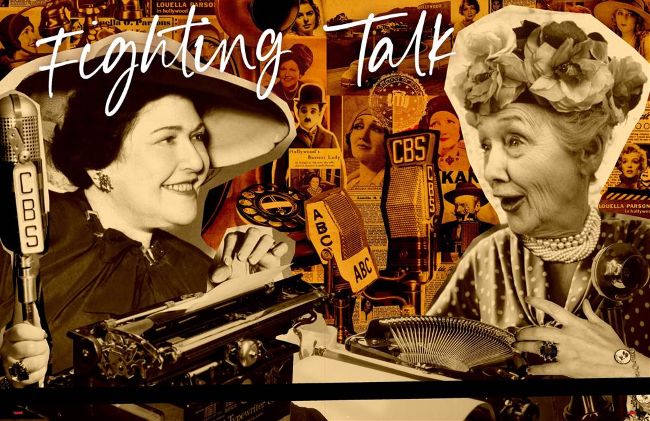
ILLUSTRATION RUSSELL MOORCROFT
HOWARD HUGHES WAS WAITING ON THE STREET.
It was a Sunday evening in December 1949, and the RKO studio head was there to meet gossip columnist and radio queen Louella Parsons as she left her Los Angeles studio: Hughes had a sensational scoop for her about Ingrid Bergman, the star of his upcoming film, Stromboli. Bergman, said Hughes, was pregnant by Italian director Robert Rossellini, while still married to her Swedish first husband, and the studio mogul thought that the inevitable scandal would drum up attention for the film.
Parsons was torn. She wasn’t that friendly with Bergman, who had never kowtowed to the Hollywood gossips by sending expensive Christmas gifts or singing at their parties. Still, Parsons had never written something that could wreck an actor’s career; while she knew where the bodies were buried, she tended to leverage that information to land more wholesome stories.
But who could resist a chance to get one over on the competition? Parsons’ meeting with Hughes came four months after Bergman had met Parsons’ arch-rival, Hedda Hopper, in Rome. Hopper had specifically asked if the actress was pregnant. “Good heavens, Hedda. Do I look like it?” gasped Bergman. Despite Italian newspaper reports to the contrary, Hopper believed her and ran her denial in her column, ‘Hedda Hopper’s Hollywood’.
Parsons published her scoop, causing a scandal that led to Bergman being denounced on the floor of the US Senate for an hour as a “moral outlaw”. There were calls for her films to be banned. She didn’t make another American one until 1956, and never forgave Parsons. Bergman’s career was — for now — in tatters, but Parsons once again led front pages around the country and, as Hopper herself admitted in her autobiography The Whole Truth And Nothing But, “Louella left me with egg on my face.”
Hopper spread the rumour that Parsons had actually imprisoned Bergman’s press agent for three days immediately after the scoop to stop him giving anyone else any more details exclusively; Parsons denied it, explaining that she’d only given the stressed man dinner and somewhere to nap.
What’s remarkable is that Hopper’s claims of kidnapping were not dismissed out of hand — any more than the rumours that Parsons only got her column in the first place after helping her millionaire boss and close ally, newspaper titan William Randolph Hearst, cover up a murder (she didn’t; the dates don’t fit). In the febrile world of Hollywood gossip and the war between its two most famed rivals, anything seemed possible.