Perfect WORLD
ILLUSTRATION PETER CROWTHER
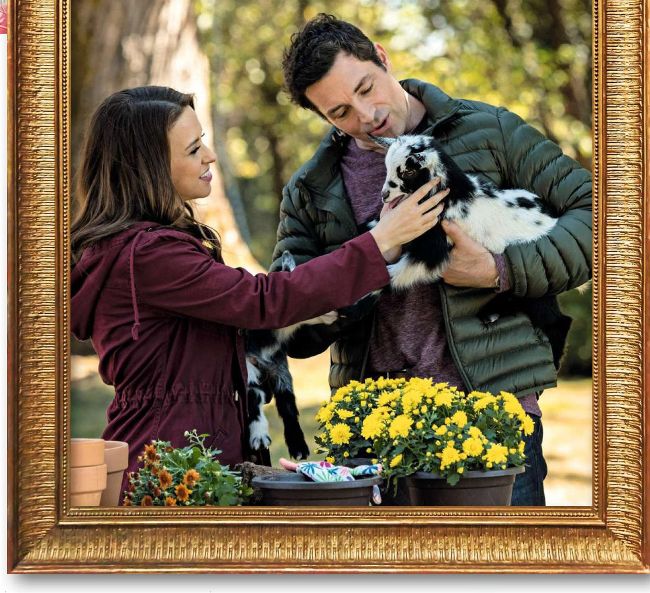
Cute-animal crucial first kiss in factory exec and he ad chocolatier action in All Of My Life;
ON THE PATIO of a gay dive bar in the California desert, surrounded by palm trees, neon lights and cheap cocktails, Ron Oliver has penned the world’s syrupiest and snowiest Christmas films.
For the last 13 years, he has been writing and directing romcoms for the Hallmark Channel, an American cable network which released 40 original Christmas movies in 2020 alone.
Oliver has scripted nine, including Operation Christmas, Hope At Christmas and My Christmas Dream, not to mention Romance At Reindeer Lodge. Is it challenging, after writing so many, to come up with new Christmas-based conflicts for couples to overcome? “Sweetie, darling,” Oliver says, “you have no idea.”
Every year has nine seasons, according to the Hallmark Channel. Its annual schedule begins with New Year’s movies, before venturing into spring, Valentine’s, the countdown to summer and summer itself. There’s an entire block dedicated to June weddings, then (naturally) there’s Christmas in July, followed by autumn movies before the countdown to Christmas begins in October. Two sister channels, Hallmark Movies & Mysteries and Hallmark Drama, bulk up the portfolio — the whole lot can be watched in the UK via Amazon Prime Video.
Yet while the seasons change, the stories stay the same. Hallmark movies regularly feature a career woman moving back to her hometown; royals dating commoners; a small business that needs saving; two people who hate each other slowly falling in love. These packages regularly have pun titles (You’re Bacon Me Crazy, the story of two rival food-truck owners who fall in love) or ones that are so straightforward you assume you’re missing something (Easter Under Wraps, about an undercover chocolate-factory owner who falls in love with her head chocolatier).
How exactly did a greetings-card company come to produce over 100 movies every year?
Watch even a small sample and you’ll notice the same actors, the same extras, even the same sets. Behind the scenes lies a self-contained subindustry of the filmmaking world, where a recurring cast and crew describe each other as “family”. But how do this family make so many films? Who are they making them for? And why, exactly, do the female leads always seem to be bakers?