CLASSIC ALBUM
HOTTER THAN JULY
STEVIE WONDER
THE MOTOWN LEGEND’S FIRST RECORD OF THE 80s WAS A BACK-TO-BASICS RETURN TO FORM. A TIGHT COLLECTION IN WHICH STEVIE PLAYS IT SAFE WITH HIS TRADEMARK FUNKY SOULFUL POP BUT DELIVERS A PUNCH THROUGH ARDENT POLITICAL ACTIVISM.
FELIX ROWE
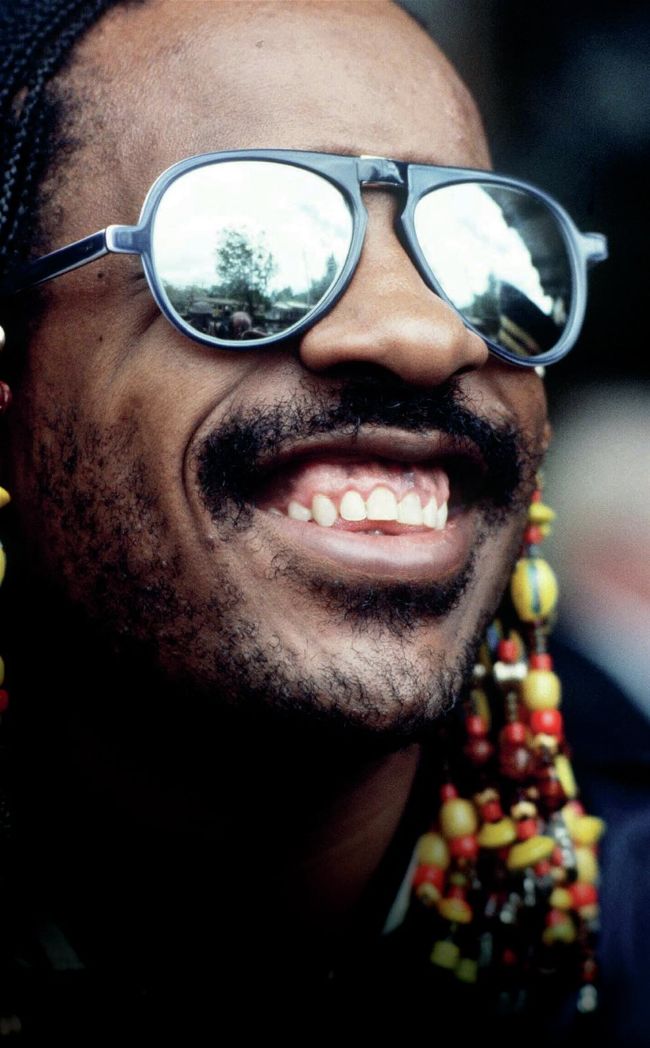
FROM THE OPENING HOWL OF RAW EMOTION TO ITS CONCLUDING RALLYING CRY, HOTTER THAN JULY IS A CELEBRATION OF VITALITY, EXPRESSED WITH UNBRIDLED JOY AND STEVIE WONDER’S INSTINCTIVE MUSICALITY
© Getty
I hear music in colours.” So once sang a certain Classic Pop favourite (that’s Stephen Duffy, by the way). It’s an evocative notion that conjures up rich imagery in the mind’s eye; a feast for the senses whereby sounds are expressed in a vibrant palette of hues. But if the idea could be said to embody any musician, then first in line must surely be Stevie Wonder.
For someone who has been without sight since infancy, Stevie Wonder not only hears music in colours, he sees – and paints – colours through music. Hotter Than July is the perfect embodiment of that. Just like the album cover itself that glows in sun-dappled fervour, the music within is positively bursting with colour. The kind of warm, inviting, fully-saturated tones that instantly emit the feelgood factor. It radiates energy in that totally unique and refreshing way that only Stevie knows how.
From the opening howl of raw emotion to its concluding rallying cry, Hotter Than July is a celebration of vitality, expressed with unbridled joy and Wonder’s instinctive musicality. But underneath the record’s exterior, there’s a second layer that throbs with deep-rooted politics and social activism. Again, this duality is reflected in the packaging: flipping the cover image of Stevie in sweating ecstasy will reveal a portrait of Martin Luther King Jr on the inner sleeve, flanked by photographs portraying (white) police brutality against Black civilians and peaceful protesters. This stark imagery is accompanied by a dedication calling for King’s birthday to be officially recognised as a national holiday, while seeking an end to “bitter confrontation and inevitable bloodshed.”
ONE INTRIGUING OFFSHOOT OF STEVIE’S BLINDNESS IS THAT HIS BODY CLOCK IS NOT CALIBRATED TO NIGHT AND DAY. HE WOULD WORK AT ANY HOUR AND EXPECT HIS TEAM TO BE READY.
To the uninitiated, the ubiquitous Happy Birthday – with its sugar-rush nursery-rhyme chorus – could be dismissed as a slightly anodyne, corny-but-harmless soundbite, custom-made for singing birthday cards. In fact, it’s a deeply political call to action to counter social injustice and inequality. Like Born In The USA a few years later, the buoyant singalong chorus obscures the harder-hitting message of the verse. Wonder’s silky delivery can be too sickly sweet for some tastes. But, to guarantee its effect, he’s canny enough to sugar-coat the pill to make sure it’s swallowed.
Elsewhere Cash In Your Face tackles the injustices of racial discrimination via some of Stevie’s most direct lyrics – pitched as a conversation in which a Black man is turned down for a tenancy based on the colour of his skin, regardless of his ample funds or ‘respectable’ job. Meanwhile, Wonder’s Bob Marley tribute Master Blaster (Jammin’) touches on race politics, noting that “the world’s full of problems” while referencing the recent war in Zimbabwe. Ultimately, though – and this is characteristic throughout – the underlying message remains positive and celebratory.