FALSE MEMORIES
Could your memory be hacked?
Research suggests that your recollections aren’t just worryingly fallible, they’re also surprisingly malleable. So could someone plant a false memory in your mind?
by DR LUCY MADDOX
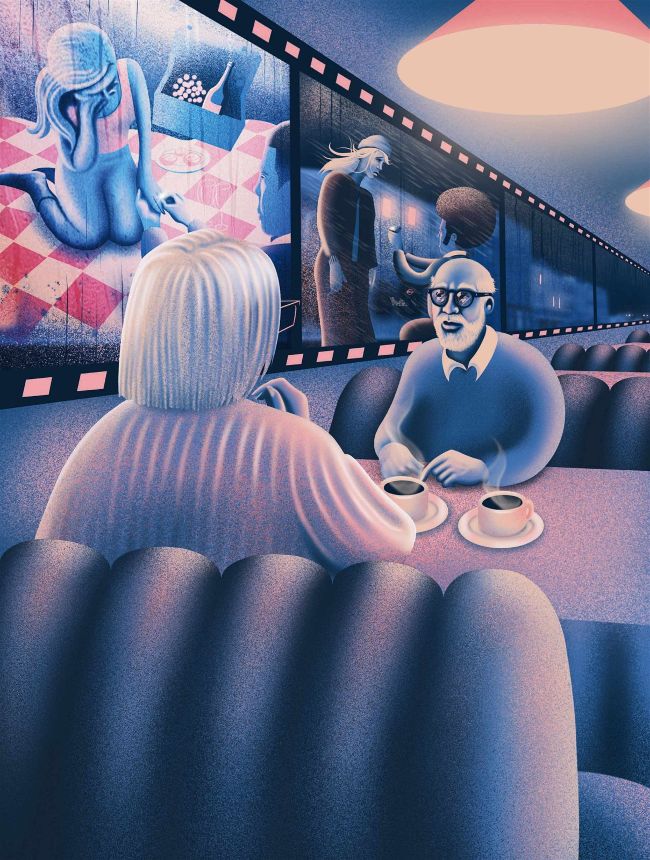
ILLUSTRATION: MATTHEW HOLLAND
What is Darth Vader’s most iconic line in The Empire Strikes Back? And how does the Evil Queen address her mirror in Disney’s Snow White and the Seven Dwarfs? Unfortunately, there are no points for the answers “Luke, I am your father” and “Mirror, mirror on the wall.” The actual lines are “No, I am your father” and “Magic mirror on the wall.”
But don’t worry if you, like so many, slipped up slightly here. Be it movie quotes or even the details of well-known images like the Monopoly Man’s supposed monocle (he’s never actually worn one), collective misremembering is common. In fact, there’s even a scientific term for it: the Mandela Effect.
The name comes from researcher Fiona Broome who, in 2009, found that many people writing on the internet (including herself) had a memory of Nelson Mandela dying in prison in the 1980s, despite him being released and living until 2013.
False memories appear in our everyday lives, too. It can be different recollections of who agreed to take the bins out or being sure that we’ve locked the front door when actually we haven’t. We’ve all felt certain of something that’s happened, only to have to eat humble pie when proven wrong.
So why does this happen? How can we recollect things so differently from other people – and so differently from what actually occurred? The short answer is our memories are unreliable. Unlike the episode of Black Mirror where everything is recorded as we live it, we don’t have a perfect playback of our previous actions (thank goodness – I can do without seeing some of my finest moments played back to me). Human memory is fallible.
“HOW CAN WE RECOLLECT THINGS SO DIFFERENTLY FROM OTHER PEOPLE?”
False memories are memory errors that happen when we remember a past event differently from how it happened: different details, a mash-up of multiple events or even remembering something that never happened. We might think we’ve taken a medication when we haven’t or misremember where we met someone. More serious examples have historically included worries that people might misremember significant (and potentially abusive) childhood events, if manipulated by others.