ANXIETY EXPLAINED
ANXIETY
YOUR ULTIMATE GUIDE TO UNDERSTANDING, COPING AND CONQUERING THE INNER DEMONS
WORDS: DR CHRISTIAN JARRETT
ILLUSTRATIONS: JOE WALDRON
WHAT IS ANXIETY?
Essentially, anxiety is an emotional state of nervous apprehension that often involves negative and worrisome thoughts and physical jitters.
Although anxiety is often focused on a specific upcoming event or challenge, it can sometime be more diffuse – experienced as a general unease about the future. To analyse it more deeply, anxiety can be broken down into thoughts, feelings and behaviours. For instance, you think you might make a fool of yourself in a meeting; that makes you feel nauseous; and this affects your behaviour, so you decide to miss the meeting. In the short-term, dodging the meeting makes your thoughts and feelings subside but this strategy is likely to feed your anxiety in the long-term. This is a key feature of anxiety: it can provoke avoidance, that perpetuates the anxiety.
“Essentially, anxiety is an emotional state of nervous apprehension that often involves worrisome thoughts”
WHAT CAUSES ANXIETY?
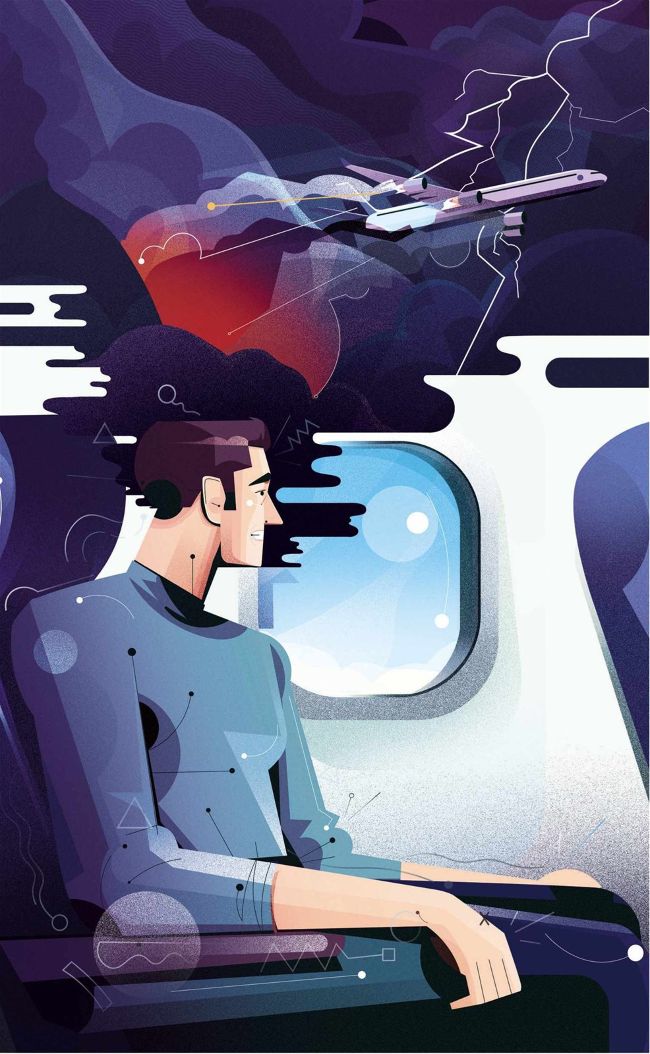
A bout of anxiety will often start with negative thoughts about an upcoming situation. For instance, worry that an exam will be too difficult and end in failure; or that something will go wrong on a flight. These expectations can lead the brain to trigger a fear-response, which releases hormones, especially adrenaline, that activate your sympathetic nervous system. This primes your body to survive a threat – to fight, flee or freeze. If you’re confronted with a truly dangerous situation, it could save your life. But you can think of unhealthy anxiety as a false alarm, one that primes your body in a way that’s out of proportion to the situation. A pounding heart and adrenalinepumped muscles aren’t too useful during an exam or on a flight. Other causes of anxiety include past traumatic experiences that leave you in a permanently fearful state; certain drugs that trigger fearful thoughts or your fight-or-flight response; and medical conditions, such as hyperthyroidism, which can play havoc with fear-related hormones.
“Avoidance can also take the form of using unhelpful coping strategies to mask your anxious feelings – such as getting drunk to calm your nerves”
WHAT DOES IT FEEL LIKE?
Depending on the intensity of your anxiety, it usually feels unpleasant and uncomfortable, in large part due to the physical symptoms. These can include a racing heart, sweaty palms, dizziness, shakiness, stomach churn, nausea and more. Some people with chronic anxiety problems find the physical sensations associated with anxiety especially troubling and, of course, this can then feed their anxiety (imagine someone who is anxious about public speaking who gets freaked out by their shaky hands and tummy butterflies).