Q&A
YOUR QUESTIONS ANSWERED
... WHY ARE OUR KNEES SO PRONE TO INJURY?
... WHAT IS ASH DIEBACK?
... WHAT MAKES SOMEONE AN ADRENALINE JUNKIE?
... HOW DO YOU GET HEALTHY HAIR?
... WHAT IS THE SNOWBALL EARTH HYPOTHESIS?
... HOW DOES A SMART WATCH MEASURE YOUR STATS?
... IS THERE A BETTER WAY TO GET RID OF SPOTS THAN BY SQUEEZING THEM?
... CAN YOU STILL PASS ON COVID-19 IF YOU’RE TESTING NEGATIVE?
... WHAT IS HOLY FIRE DISEASE?
... HOW DO SOLAR FLARES AFFECT THE EARTH?
... IF THE UNIVERSE IS EXPANDING, WHY IS THE
ANDROMEDA GALAXY GETTING CLOSER TO OURS?
Email your questions to
questions@sciencefocus.com
or submit on Twitter @sciencefocus
OUR EXPERTS
WHAT’S THE BEST THING TO DO WHEN YOU CAN’T SLEEP?
JASMINE HARRINGTON, VIA EMAIL
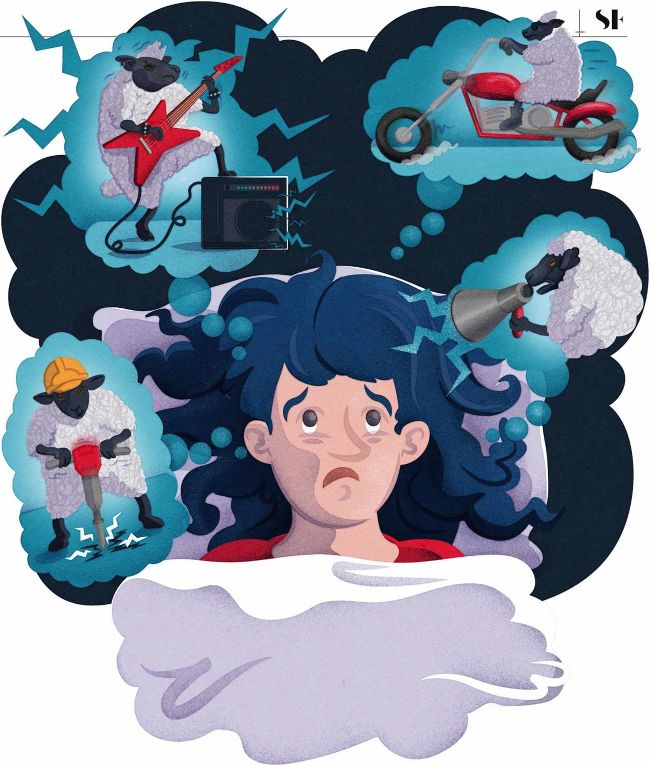
ILLUSTRATION: DANIEL BRIGHT
If you’ve been lying in bed unable to sleep for 15-20 minutes or more, it’s a good idea to get out of bed and do something else (ideally in another room). The logic of this tip comes from considering stimulus-control (we learn to behave in a certain way in the presence of certain stimulus). We want to pair sleep (rather than being awake) with the bedroom environment. Only return to the bedroom when you are ready to sleep.
Although people will differ in terms of what they want to do while up at night, some might be keen to try out relaxation techniques. Breathing exercises come in different forms, but one technique is to breathe in through your nose for the count of four (feeling your tummy fill with air) and then breathe out through your mouth for the count of four (stop immediately if you feel faint).
Mindfulness, which involves being in the moment, without judgment, can also help to reduce stress and support sleep, and some people enjoy taking part in guided meditations. Mental imagery can also be helpful, and in a study by the eminent psychologist Dr Allison Harvey from the University of California, Berkeley, it was found that the participants of a study who were asked to remember a relaxing scene in detail (and considering how it impacted their different senses) fell asleep more quickly than those who were not asked to do this. One explanation is that the relaxing scene filled up ‘cognitive space’ that could not then be used to engage in stressful or distressing thoughts which could interfere with sleep.