IF THE CAP FITS
Tony Pulis hasn’t always been universally popular, but he’s the unexpected inspiration for a new top-flight trend this season – he tells FFT why he’s happy to be a style icon, right down to an unlikely acting debut…
Words Chris Flanagan
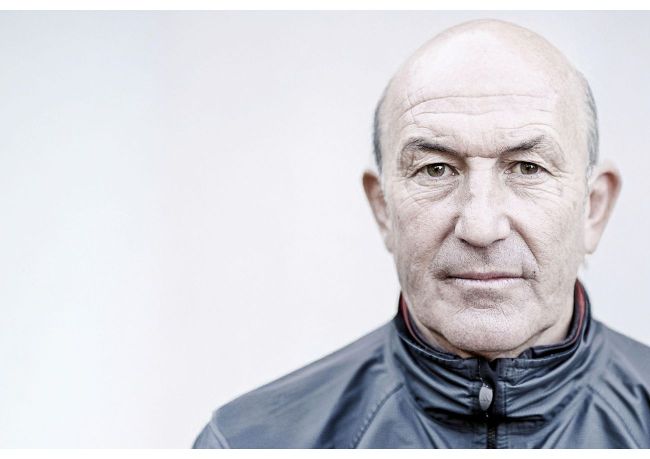
A lmost exactly five years ago to the day, Tony Pulis left management for the final time. Sacked by Sheffield Wednesday after just 10 games, having previously struggled to win over the fans at West Brom and Middlesbrough, ‘Pulis Ball’ was considered archaic and unattractive by most people in football. The world had moved on. Understandably then, there’s a wry smile on his face today, as he talks to FourFourTwo at his home on the South Coast. Pulis retired as a villain, but half a decade later has become the unlikeliest of heroes – the godfather of the Premier League’s in-vogue style, which has seen a succession of managers place greater emphasis on corners and long throws. “I used to get slaughtered!” he laughs. “I was on the phone recently with David Kemp, who worked as my assistant for over 20 years, and he said, ‘It’s just fashion.’ He’s retired to America with his wife and he said, ‘What I’m doing at the moment, Tone, is I’m opening a box I had in the ’60s and bringing out the bell-bottoms – I don’t have to buy them, I’ve already got them!’ That’s fashion, it spins around.”
Like those flares from the 1960s, Pulis Ball is back in fashion, and the manager behind it has arguably become more popular than ever as a result. Recently, he’s also become a TV star, as part of a light-hearted Uber Eats advertising campaign alongside Sam Allardyce and Alan Pardew. Few ever expected the Welshman to become so marketable, not least the man himself, given his humble Newport origins. “There were eight of us living in a little house at the docks,” he explains. “Four of us boys slept in one bedroom, my sisters were in the other bedroom, and our mum and dad in the little box room. Dad was a steelworker and mum lived for the family.” Father Angelo was the eldest son of a Maltese immigrant – Tony learned his trade as a player at Newport YMCA, before turning pro with Bristol Rovers, where he had two spells either side of a brief stint in Hong Kong with Happy Valley. Later signed by Harry Redknapp at Bournemouth, it was at Dean Court he became a manager for the first time, after Redknapp left for West Ham. His second job at Gillingham was where another of his fashion trends began – the baseball cap he wore for the rest of his managerial career. “I wore a cap when it was tipping down with rain, and I think we won,” he explains. “In the next game, we struggled for the first half, so I was looking for my cap, I thought that was the reason. I’m pretty superstitious, most managers are – you wear the same tie or the same suit if you win. I put the cap on, then I think we won the game in the second half. From there I thought, ‘Well, that cap is sticking with me now.’”