In The Studio With | Rival Consoles
Rival Consoles
Rival Consoles’ soundtrack to the dance production Overflow is a dark, complex body exploring the sinister side of digital media. Danny Turner finds out more
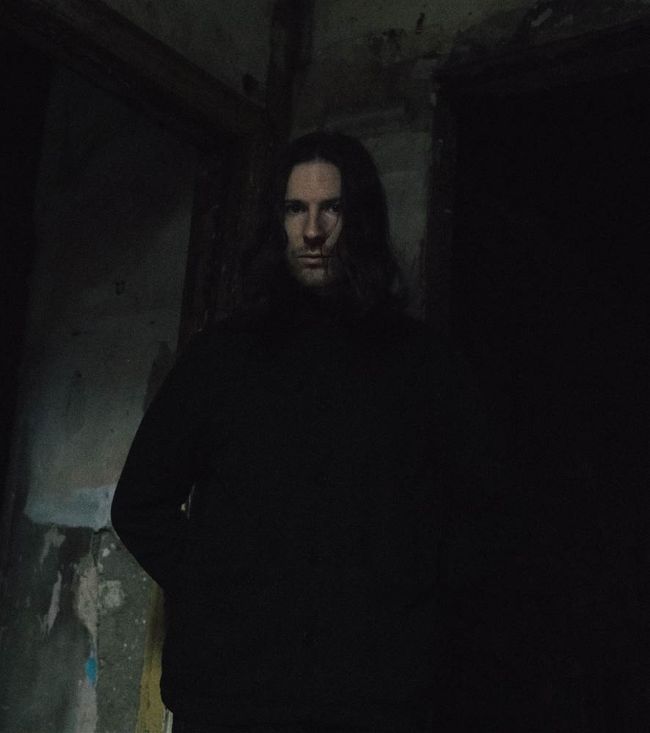
© Ozge Cone
Ryan Lee West’s Rival Consoles alias has regularly presided over a desire to create unsettling sound-worlds that breathe heavy with technological ingenuity. Consumed by creating abstract themes from familiar generic tropes, on last year’s Articulation, West transformed handdrawn sketches into shimmering, glacial sound fields skewing our notions of modern techno.
On his last project, Overflow, West worked with renowned choreographer Alexander Whitley to create music for a contemporary dance production. His soundtrack uses algorithmic technologies to signify the effects of big data and how it sows division in a society profoundly influenced by social media’s exploitation of human vulnerabilities.
At over 72 minutes in length – West’s longest album to date – Overflow’s chaotic, electromagnetic menace is likely to engross the listener in any environment, but the concept truly comes alive within the kinetic digitalism of Whitley’s groundbreaking dance production.
How did you find yourself working with choreographer Alexander Whitley?
“I’d worked with Alex a few times over the past five years, composing music for contemporary dance, but this is the first time we decided to do a massive project together. It’s a really big beast with 72 minutes of score and the first time I got the chance to get quite involved in a live theatre production. I like the aspect of working within theatre because you have to score something that’s happening in the moment versus the playback of film, which is set in stone. Contemporary dance is pretty abstract, so I feel there are a lot of synergies with electronic music that, absent of vocals, are very abstract too.”
What themes are being explored in this new dance production?
“It’s a very deep conceptual project that looks at how big data has shaped and affected our lives, mainly focusing on social media and how everyone’s being manipulated by extremely clever and invisible systems to keep us engaged and the consequences of that, from the extremes of Cambridge Analytica to the political manipulation of society. Before we started the project, Alex suggested that I read a short philosophical book by Byung-Chul Han called Neoliberalism and New Technologies of Power, which expresses how the internet and social media are distorting us. That was heavily referenced throughout the whole project and because it’s borderline dystopian it makes the work quite dark and heavy – if not tragic in places – both visually and sonically, but with a lot of nuance.”
What’s your relationship with social media considering the current zeitgeist, which tends
to imply there are more cons than pros?
“Similar to a lot of people I use it less and less in terms of what it was initially intended to be used for. I use it to promote my music, but everybody’s selling something, so capitalism is obviously a part of it. There are layers of complexity to it, but because it’s such a well-engineered system you only see the surface. Certain controversies have come to the forefront, like when Zuckerberg was interviewed and you can tell there’s a very shady underbelly to it all. But that’s obvious because anywhere there’s a lot of power and money there’s always going to be manipulation and dark things going on. I think people are perhaps a little more sceptical about the bigger picture now.”