Interview
GOLD PANDA
Derwin Dicker’s fourth album finds him exploring mental health and self-care through sample-based electronica. Matt Mullen finds out how it was made
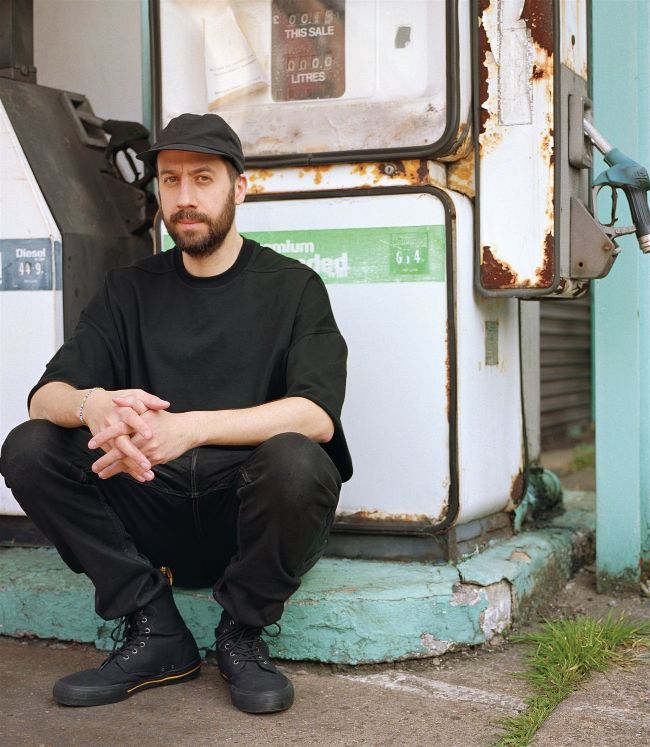
All images © Laura Lewis
Some artists spend their career restlessly experimenting with all kinds of equipment, instruments and gear, taking stylistic detours into new approaches and techniques with every album released. Others discover an affinity for one or two pieces of kit early on, forging an ongoing creative partnership with their tools that goes a long way towards defining their sonic fingerprint. Derwin Dicker, better known as Gold Panda, can firmly be placed in the latter category.
Dicker’s worked with the Akai MPC and a turntable pretty much since his first release, Quitter’s Raga, came out in 2009, chopping up, arranging and manipulating samples into music that sits somewhere in between the fidgety pulse of dance music, the sample-happy, DIY ethos of hip-hop and the glitchy abstraction of minimal electronica. Other instruments and machines have rotated in and out of his setup, but the core of his approach has remained centred on carefully chosen samples, hidden gems discovered in record stores, sliced beyond recognition and given new life in the MPC’s circuits.
Even when Dicker’s dived into new tools – devising self-built patches in Max, for example – they’ve ultimately served as a way to explore new dimensions of this beloved sampler, a tool that has shaped his music not only through its unique sound, but through the peculiarities and limitations of its workflow. The MPC’s gently saturated tones and the crackle of the vinyl he samples with it are present throughout his discography, lending an emotive warmth and a pang of nostalgia to deeply personal electronic music that’s often tinged with an affecting sense of melancholy.
Dicker’s fourth album, The Work, finds him venturing deeper into emotional territory, exploring the difficult journey towards mental stability he’s undertaken as a father. “The work is something that’s used in my therapy a lot,” he says. “I hear it a lot in self-care and books about mental health – the work on yourself basically.” We caught up with Dicker to find out more about how the record was made.
Could you tell us a little about the background to this album?