Interview
MACHINEDRUM
The US producer tells Matt Mullen about the “eyeopening, game-changing experience” of mixing his latest Tstewart album in Dolby Atmos
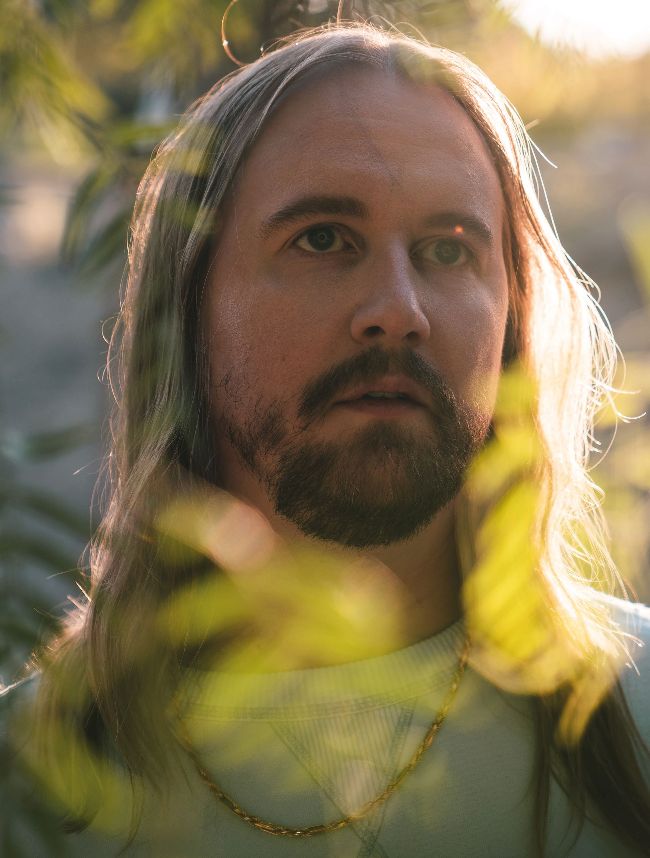
© Simon Green
When we last spoke to Travis Stewart, he’d just released the Machinedrum album Human Energy, another entry in a kaleidoscopic catalogue that’s seen the producer progressively expand the Machinedrum universe to encompass madcap drill’n’bass, amphetaminic breakbeats and prismatic glitch-pop, culminating most recently in the new-age bass music of 2020’s A View of U.
Stewart’s work as Machinedrum might be stylistically diverse, but at its core, the project revolves around three fundamentals: samples, synths and beats. It makes sense, then, that he’s revived a separate alias for his latest project, which drops the latter two elements and embraces an ambient, neo-classical vibe that sounds a little like what you’d get if you locked Philip Glass in a room with a bag of weed, a laptop and a Splice subscription.
Inspired by the spiritual nourishment that LA’s Elysian Park provides Stewart amid the oppressive thrum of the city, Elysian threads intricate, meticulously programmed melodies into a minimalist patchwork, cascading arpeggios that soar into the stratosphere, carrying the listener upwards, away from the smog and into the Californian sunset.
As part of the project, Stewart produced a Dolby Atmos mix of the album, using advanced techniques and processes – spatial LFO modulation, immersive 3D reverb – to explore how the creative potential of Atmos could be used to expand and reimagine his own sound. Speaking to the producer from Los Angeles, we found out more about how this new approach opened up radical compositional possibilities.
“COMING OFF OF FINISHING HUMAN ENERGY, I WAS SICK OF PROGRAMMING DRUMS, AND SICK OF DOING VERY KIND OF BOMBASTIC-SOUNDING MUSIC”
The new release is under a different alias to your usual work as Machinedrum. What was the intention there?
“I actually started using the name Tstewart around the same time I started releasing Machinedrum records. I had it reserved for more indie stuff, stuff that was more instrumentleaning, and less electronic-driven. I didn’t end up releasing anything under that name, apart from a couple of one-offs here and there. I released an album in 2006 under Tstewart. Since then, there have been a few other releases that are in that similar vein.