50 YEARS OF PROG
THE PROGRESSIVE ROCK EXPERIMENT
In 1971, Yes put prog to the test with a song called “Roundabout.” Rock and roll would never be the same.
BY JOE BOSSO
“WE WERE GOING TO THROW THIS WHOLE THING OUT TO THE WORLD. THAT WAS THE PLAN”
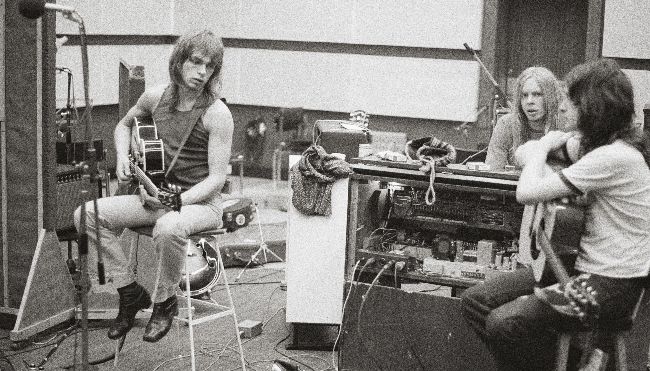
(opening page) Yes recording Fragile at Advision Studios in London, August 20, 1971. (from left) Bill Bruford, Chris Squire,
Steve Howe, Jon Anderson and Rick
Wakeman
MICHAEL PUTLAND/GETTY IMAGES (ADVISION)
STEVE HOWE HAS no idea where the term progressive rock came from, but he makes one thing clear: It certainly didn’t start with him. “I never called us ‘progressive rock’ or ‘prog-rock,’” he says. “As I recall, when I first joined Yes, we all used to call our music different things. There was ‘orchestral rock’ and ‘cinemagraphic rock.’ We never argued about it, but there were a lot of names and terms being tossed about.”
So what term did he use to describe Yes’s music? Howe laughs. “I often called it ‘soft rock,’” he says. “I thought what I wrote was a sort of soft rock, but the phrase didn’t catch on, at least not with what we were doing. But progressive rock? Where that got started, I don’t know. I think it might have come after the fact.”
Howe had already achieved a fair amount of notoriety as a guitarist by the time he joined Yes in 1970. Beginning his career in 1964 at age 17 with the London-based R&B group the Syndicats, he then joined the soul-and-covers band the In-Crowd, which soon transformed into a psychedelic outfit called Tomorrow. After Tomorrow broke up in 1967, he played on a few sessions and recorded a couple of tracks with a pre-Faces Ronnie Wood before hooking up briefly with a rock trio called Bodast. When that band’s record deal fell through, Howe plotted his next moves. He auditioned with Keith Emerson’s band the Nice but didn’t think they were the right fit for one another. He bailed on a try-out for Jethro Tull when he discovered they weren’t open to his songwriting. And an audition with the Atomic Rooster (which featured Emerson’s future bandmate Carl Palmer on drums) didn’t result in a love match.
“I had done my share of playing around and had gained a lot of experience,” he says, “but I was looking for the right kind of band that allowed me to do whatever the hell I wanted.”
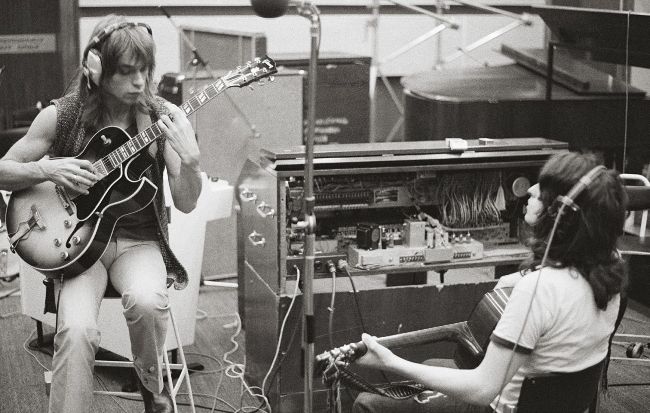
Howe, Wakeman and Anderson at Advision (left and above)
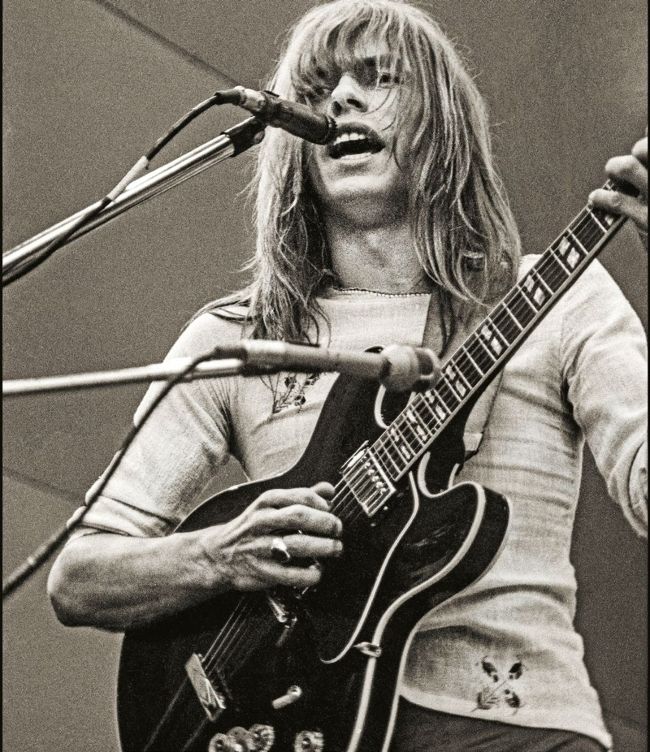
Onstage at the Crystal Palace Garden Party, London, September 2, 1972
DICK BARNATT/REDFERNS/GETTY IMAGES (CRYSTAL PALACE)
What Howe was looking for was a musical outlet for his burgeoning interest in songwriting, but also one in which he could apply all the facets of his guitar-playing vocabulary, which by now included jazz, rock, classical and flamenco. And such a situation opened up when Yes founding guitarist Peter Banks left the band in April 1970. Joining Yes — which then included singer Jon Anderson, bassist Chris Squire, drummer Bill Bruford and keyboardist Tony Kaye — gave Howe the perfect opportunity to spread his creative wings.
“I was ready for it,” he says. “Right away, I could feel that this was a band that was head and shoulders with me, and vice versa. I had been in bands that were pretty good, but suddenly I was with people who were world-class. I admired each member for his particular talent. I thought this was like an orchestrated band. We were going to write parts; we were going to write songs with great lyrics and music that really went somewhere. We were going to throw this whole thing out to the world. That was the plan.”
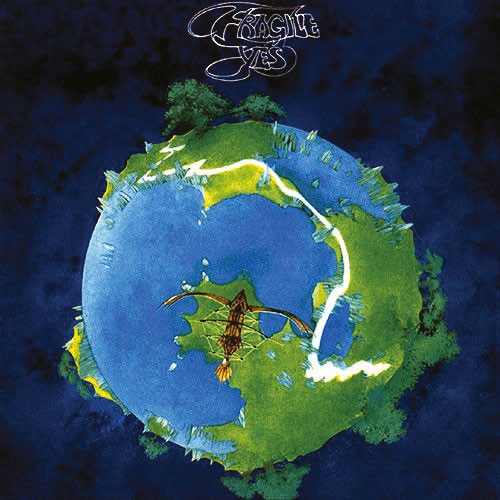
By then, Yes had released two admirable but rather disjointed albums — their eponymous 1969 debut and 1970’s Time and a Word — that failed to chart in the U.S. and barely made a dent in their homeland. Howe’s transcendent skills as a player and songwriter ignited a creative fire in the group, and they kicked off 1971 in grand style, starting with The Yes Album. The group dispensed with the reworkings of cover tunes that had bogged down their earlier efforts and focused on original material that allowed them to carve out a new identity. The album was brimming with expansive, energetic and hookfilled rockers like “Yours Is No Disgrace,” “Starship Trooper” and “I’ve Seen All Good People,” each of which made full use of Howe’s wide-ranging repertoire of guitar styles. The Yes Album turned the heads of critics and record buyers alike, hitting number four in the U.K. and cracking the U.S. Top 40.