IN THE BEGINNING
OVER THE NEXT PAGES, WE LOOK AT THE MUSIC THAT LAUNCHED BLUES TO POPULARITY, AND THE ICONIC BLUES GUITARISTS WHO BIRTHED THE ROCK-STAR PERSONA.
ROBERT JOHNSON, Son House, Lead Belly, Memphis Minnie, Charley Patton, John Lee Hooker, Howlin’ Wolf… History has a way of deifying names such as these, ensuring that they’re spoken about in awed, reverent tones because of their innovative musical inspiration. In one respect, this reverence is completely justified. These blues guitarists are among the founders of rock and roll, and of popular music as a whole. Without them there would be no Chuck Berry, Keith Richards, Eric Clapton, Jeff Beck, Jimmy Page, Duane Allman, Samantha Fish or Gary Clark Jr., to name a handful of guitarists influenced by their music.
And so they are revered, not only for their music, guitar talents or songwriting abilities but also for the hard lives they led, which were more often than not painted into their music. These legends of blues plied their craft during one of the ugliest periods of racial strife and economic disparity in America. Alcohol, drugs, crime and poverty were among the hardships that informed their music. Lead Belly was a convicted murderer, Robert Johnson a serial womanizer. Son House was a hard-drinking ex-con, and boozy Memphis Minnie was known to hold her own in a fight. Only a fool would mess with any of them.
The music itself often gets the hagiography treatment too, in a way that smooths its legacy and ignores the circumstances that bred it. The likes of Lead Belly have been embraced as folk heroes by artists such as Bob Dylan, and by the most recent crop of new blues-rock bands, who have favored these older figures over the classic blues-rock explosion crowd of the 1960s, because they’re more authentic and raw. Nirvana effectively turned the MTV generation on to Delta blues with their cover of Lead Belly’s “In the Pines”/“Where Did You Sleep Last Night?”
But an artist like Lead Belly wasn’t trying to be restrained or virtuous. He was just working with the tools he had - that sparser sound he and his peers honed in the days before Marshall stacks and Fender Strats. If Robert Johnson or Blind Lemon Jefferson had had access to an electric guitar, there’s every chance he would have cranked it all the way to 11, like the rock and roll stars who were to come. And that’s what the men and women on the next few pages were: the pioneers of blues and rock and roll, yes - but also the first rock stars.
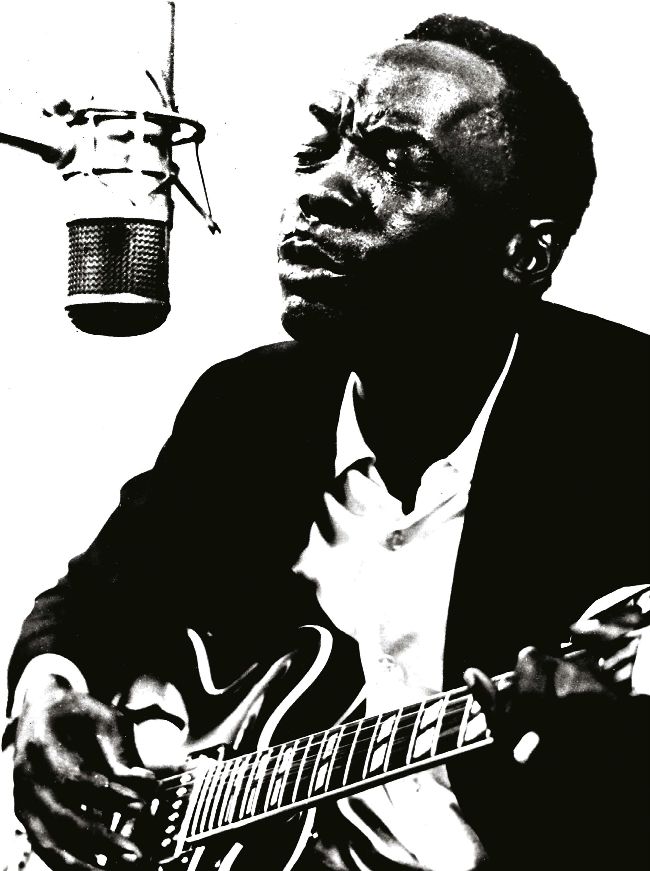
John Lee Hooker recording in 1967
LEAD BELLY
The forefather of rock and roll.
LEAD BELLY WAS born Huddie Ledbetter in 1885 in Mooringsport, Louisiana, close to Caddo Lake, a tranquil spot far removed from the bright city lights of Shreveport, the nearest big town. His parents were farmers, and by all accounts Huddie was a tough kid who was able to pick more cotton than anyone else.
He quickly came to like women, corn liquor and trouble in about equal proportions. He liked hanging out in Shreveport’s red-light district, and by the age of 16 had not only gained an enviable reputation for his sexual prowess but also heard the barrel-house piano players, whose walking-bass figures would become a trademark of his own powerful rhythmic style.
By the age of 33, Lead Belly had mastered the 12-string guitar, met up with Blind Lemon Jefferson and become a regular performer at local dances and fish fries. But he soon ran into serious trouble. After an assault conviction, he spent a year on a chain gang, from which he escaped. He subsequently adopted the name Walter Boyd.