Vet, set, go
You’ve found the dream horse and are ready to add him to your stable – but first comes the vetting. Sally Hodgson looks at how vets put a potential purchase through his paces
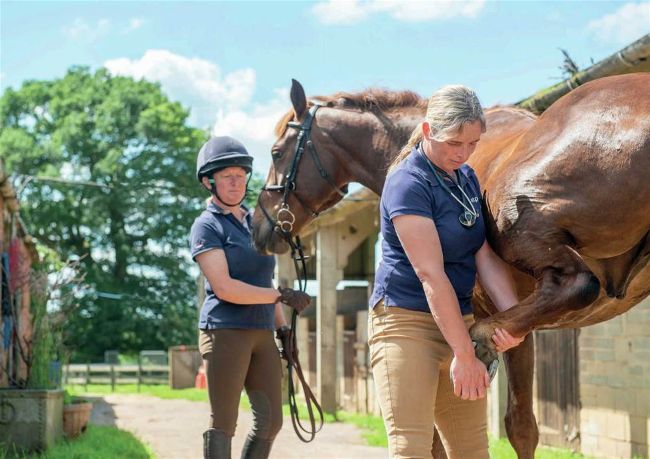
Photos: Bob Atkins, Jon Stroud. With thanks to XL Vets practice Hook Norton Veterinary
Group, hooknortonvets.co.ukxlvets.co.uk
Our expert
Sally Hodgson BSc (Hons) MA VetMB CertAVP(EM)
MRCVS is an assistant equine vet for Hook Norton Veterinary Group. She has been a team member here for 11-year-old and has a particular interest in internal medicine and farriery.
When it comes to buying your perfect equine partner, it’s easy to get carried away and let your heart make the decisions.
However, a horse is an enormous undertaking, so you need to be sure you’re doing the right thing for both of you. So, after the potential horse of your dreams has passed all of your own checks, what are the next steps?
A pre-purchase examination, also known as a vetting, is a must. The examining vet will follow a standardised procedure and work to shine a light on potential problems and evaluate whether the horse is suitable for your needs. Let’s take a closer look at what’s involved.
What it is
Vettings act as a risk assessment prior to purchase, but aren’t a guarantee of future health, soundness, or performance. The terms pass and fail are often used but things are rarely as clear-cut as that. The vet performing the vetting is assessing suitability for purchase, for the purpose specified by the buyer – this means that while an Irish Draught