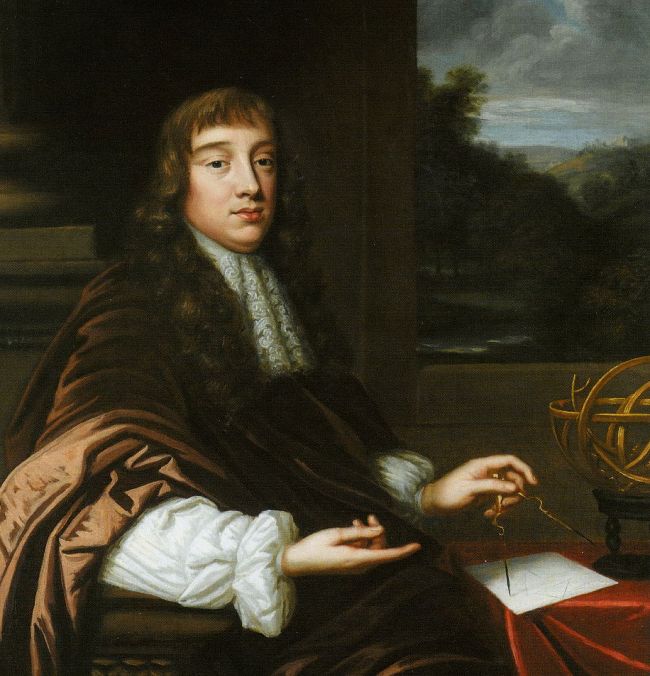
No contemporary portrait of Hooke was preserved, but this painting is believed to be him
Source: arthistoryproject.com
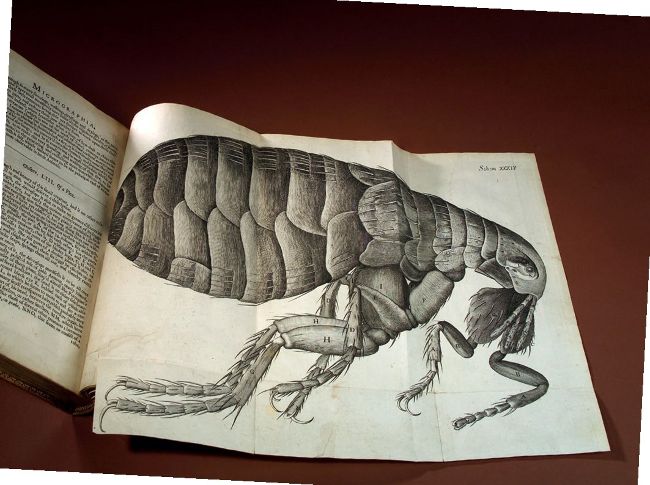
Inside Hooke’s book Micrographia is this famous detailed illustration of a flea
Source: Wiki/ Wellcome Images
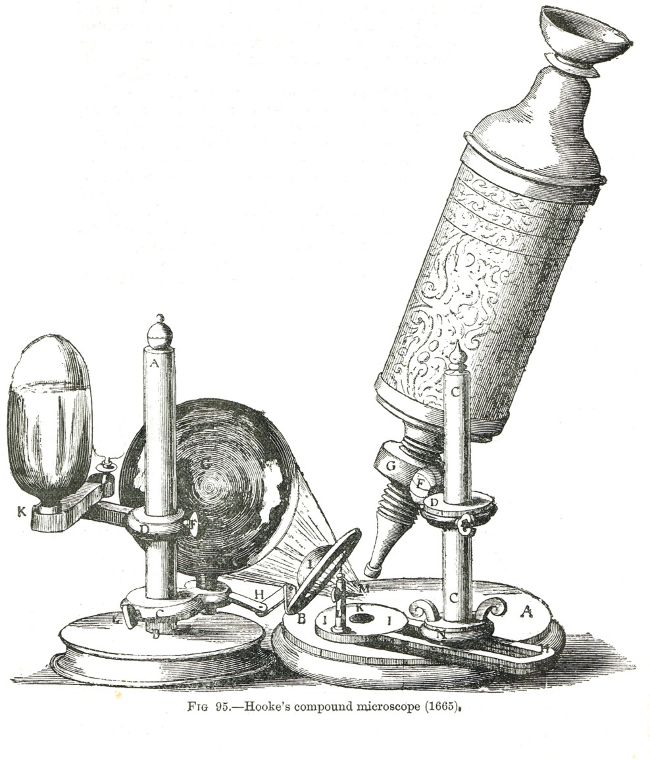
For his microscope, Hooke passed light generated by an oil lamp through a glass flask filled with water
© Alamy
A life’s work
The life of the versatile scientist
1635
On 28 July, Robert Hooke was born in Freshwater, Isle of Wight.
1648
13-year-old Hooke moved to London for an apprenticeship, but he leaves to study at the reputable Westminster School.
1653
Enrolling at Oxford’s Christ Church College, he studied a range of science subjects, including chemistry and astronomy.
1657
Hooke invented the anchor escapement, a component which would improve the pendulum clock. This cog stopped the clock running down.
1660
Hooke’s law, stating that the extension of a spring is proportional to the applied force, was discovered, though it wasn’t announced until 1676.
1663
A year after becoming curator of experiments, Hooke was elected a Fellow of the Royal Society.
1665
Following his discovery of cells, Robert Hooke published Micrographia, detailing the specimens he observed under the microscope.
1664-1665
During these years, Hooke closely studied comets. This work was published in 1666 and entitled Cometa.
1703
On 3 March, Hooke died in London at age 67.