GB
  
You are currently viewing the United Kingdom version of the site.
Would you like to switch to your local site?
9 MIN READ TIME

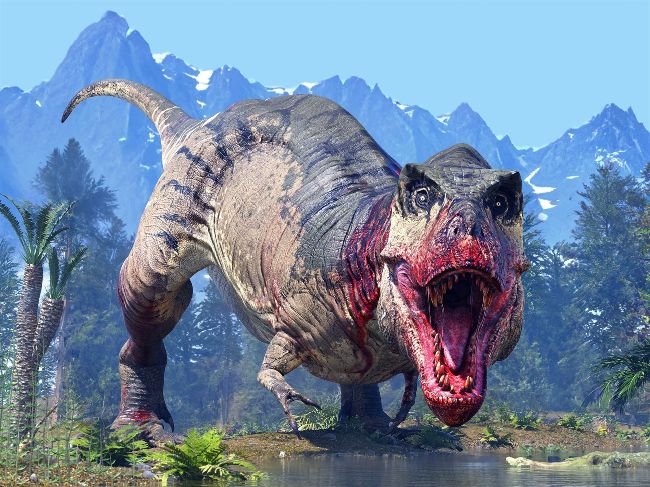
DINOSAUR PREDATORS VS PREY

Meet the most fearsome prehistoric creatures to roam the Earth and discover the food chains they depended on

© Getty

Did you know?

There were around 700 different species of dinosaurs

The ability to kill and ingest another living organism has been a keystone for the evolution of life as we know it. Without it, the world would be very different. Primitive organisms may have never emerged from the primordial soup at the beginning of life on Earth some 3.7 billion years ago. During life’s complicated journey to the modern day, some organisms rose to the top of the food chain, feasting on the flesh of those below them. This predator-prey relationship is part of the natural machine that keeps every ecosystem on Earth functioning.

Predators got their start in the world’s waters during the Paleozoic era, which started with the Cambrian period around 541 million years ago. Animals were confined to the oceans and had not yet sprouted legs to venture on land. One of the earliest predators were conodonts. These eel-like creatures were a few centimetres long with rows of rudimentary teeth scientists call elements. These were up to three millimetres in length and made of calcium carbonate. Conodonts were likely filter feeders and used their elements to prey upon tiny plankton for food.

DID YOU KNOW?

There’s less time between the existence of humans and dinosaurs than between Stegosaurus and T. rex
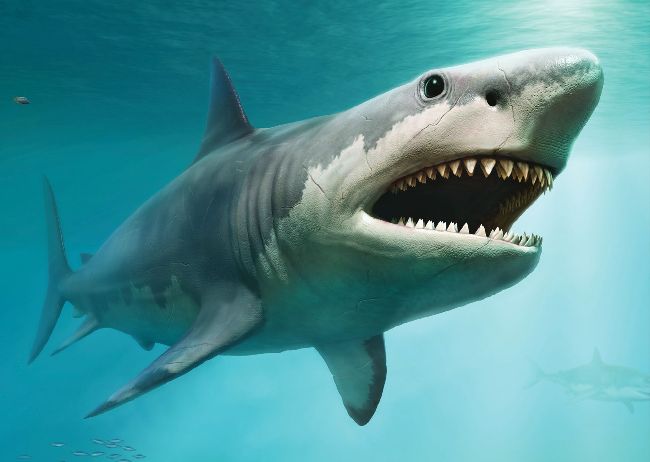
Sharks have been hunting longer than trees have existed

Some unusual-looking early ocean predators were radiodonts. Some of these shrimp-like creatures used large curved appendages to tear through the tough exoskeletons of trilobite prey. The flesh of their benthic bounty was then manoeuvred by the appendages into a mouth opening directly beneath the head. During the geological periods that followed the Cambrian, diversity in Earth’s oceans exploded. The Devonian period – 419 million to 358.9 million years ago – is often referred to as the ‘Age of Fishes’ and gave rise to some of the most menacing marine predators to have ever lived.

Unlock this article and much more with
You can enjoy:
Enjoy this edition in full
Instant access to 600+ titles
Thousands of back issues
No contract or commitment
Try for 99p
SUBSCRIBE NOW
30 day trial, then just £9.99 / month. Cancel anytime. New subscribers only.


Learn more
Pocketmags Plus
Pocketmags Plus

This article is from...


View Issues
How It Works
FREE Sample Issue
VIEW IN STORE

Other Articles in this Issue


HOW IT WORKS
WELCOME
“The dinosaurs spawned the deadliest predators the world
REGULARS
Global eye
© NASA, ESA, CSA, STScI Into the Cartwheel
Scientists are bringing back extinct Tasmanian tigers
Tasmanian tigers are extinct, but that could change
WEALTHY GERMAN STONE AGE AND EARLY MEDIEVAL GRAVES DISCOVERED
Early medieval weapons and jewellery found in southwestern
Europa’s icy shell may be pure underwater snow
Europa is a high priority for exploration ©
Extreme physics of ‘supercritical’ matter may be simple
The rules of solid, liquid and gas break
RIPPLES AROUND A DISTANT STAR PUZZLE ASTRONOMERS
This image of strange concentric shells around the
‘Forever chemicals’ can be destroyed by beheading
PFAS compounds, or ‘forever chemicals’, contaminate water around
Chinese dugongs now declared extinct
An adult dugong feeds in shallow waters of
‘Merciless’ sea monster prowled the sea 66 million years ago
An artist’s impression of Thalassotitan atrox © Getty
Your doppelgänger behaves like you, too
Human genetic variation is far from infinite Somewhere
New mini ‘moon’ found lurking in the outer Solar System
An illustration of the Trojan asteroid Polymele, which
SCYTHIAN ARROWHEADS AND BRONZE AGE DWELLING UNCOVERED
An example of a Scythian arrowhead, not found
WISH LIST
The latest GAMES
BRAINDUMP
Why doesn’t alcohol freeze in the freezer?
What are antlers made of?
© Getty Kim Blake Antlers are the large
What is air turbulence?
Lorna Patel Many of us have experienced some
PLANET-FRIENDLY HACKS
The latest book releases for curious minds
MAKE ICE CREAM IN A BAG
Following this simple recipe, your cooled snack is ready to eat in just 15 minutes
Had a go? Let us know!
If you’ve tried out any of our experiments – or conducted some of your own – let us know! Share your photos or videos with us on social media.
HISTORY
THE LOST CITY OF BENIN
The capital of Africa’s Benin Empire astonished Europeans with its beauty, so why is there nothing left?
EXPLORE A SALT MINE
Across history, people have gone to great lengths to obtain what is a common commodity today
SCIENCE
HOW TO TRAIN YOUR PET
Explore the brains and behaviours of different animals for better pet-human communication
WHAT IS PLUTONIUM?
The 94th element in the periodic table is one of the most dangerous on the planet
VOCAL CORDS EXPLAINED
How the folds within your voice box give you the ability to shout, talk and sing
SPACE
EXTREME STARS
From the biggest and brightest to the smallest and dimmest, we take a look at some stellar extremes
ALL ABOARD SPACESHIP NEPTUNE
In this latest space tourism venture, a company is planning balloon flights to the edge of space
ENVIRONMENT
DOMESTICATION
How humans created modern-day farm animals
EMPEROR PENGUINS: SURVIVAL SPECIALISTS
How the world’s largest penguins live in the harshest continent on the planet
TRANSPORT
SELF-DRIVING VEHICLES EXPL AINED
How this evolving technology is changing the dynamics of traffic and the way we drive
INSIDE TESL A’S MODEL S
The sleek 2022 Model S has improved vision for self-driving
MAGLE V TRAINS: BENEATH THE RAILS
Superfast maglev technology is revolutionising train travel across the world. Here’s how these mysterious magnetic marvels work
TECHNOLOGY
HOW GUNS WORK
Discover the origins of these projectile weapons and the mechanical principles still used in guns today
INSIDE A DSLR CAMERA
How these digital cameras use a mirror and a prism to take a picture
Chat
X
Pocketmags Support