Animal
DOMESTICATION
How humans created modern-day farm animals
WORDS SCOTT DUTFIELD
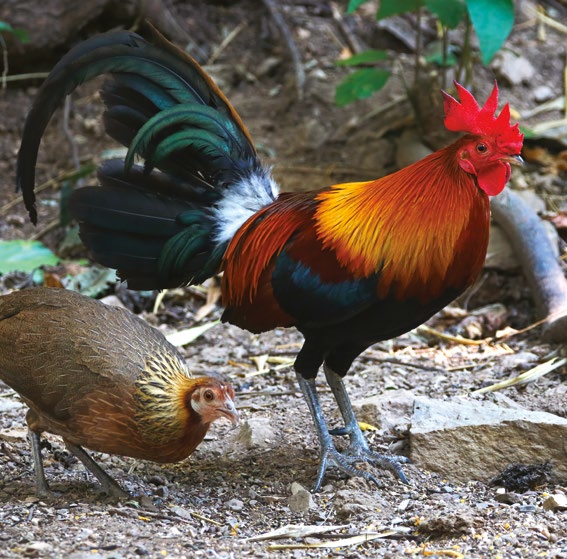
Chickens descended from red junglefowl (Gallus gallus)
© Getty
Did you know?
There are more than 1.7 billion sheep across the world
I
t’s fair to say that the domestication of animals is one of the most important advancements in human history. Known as the Neolithic Revolution, around 12,000 years ago humans began cultivating the land and breeding animals for livestock. The principle of livestock domestication centres around selectively breeding wild animals with traits beneficial for humans – for meat, milk or materials. Over millennia, humans have bred generations of animals like cows, sheep, pigs and chickens to enhance qualities such as their muscle mass for meat and wool production for fabrics.
The first wild animal to be taken by humans from its natural environment was the predecessor of the modern-day sheep, the Asiatic mouflon (Ovis orientalis), around 11,000 years ago. Since then, humans have captured and domesticated 38 different species, including 8,800 different breeds, from around the world.