SOLID ROCKET BOOSTER CHEMISTRY
Much of the power of NASA’s new rocket comes not from its main engines, but its boosters
WORDS ANDREW MAY
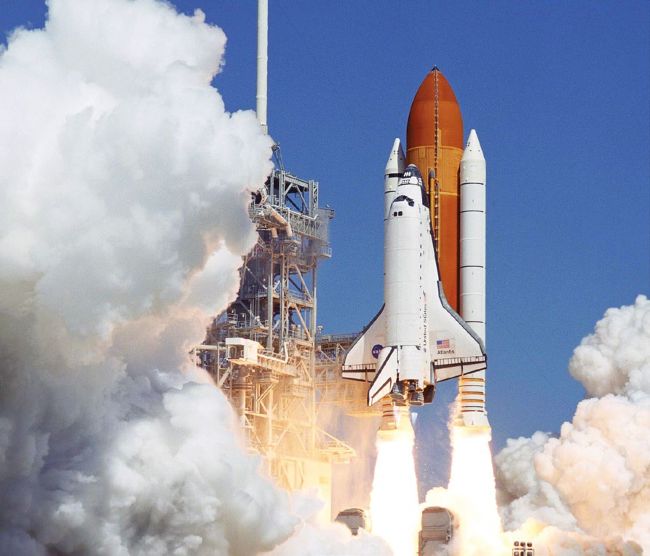
The Space Shuttle used solid rocket boosters similar to those on the SLS
Often referred to as the ‘mega Moon rocket’, the Space Launch System (SLS) is the most powerful rocket NASA has ever built. In addition to the gigantic core stage, two solid rocket boosters (SRBs) operate in parallel with the main engines for the first two minutes of flight, providing the enormous thrust needed to send the rocket on its way to the Moon.
The rocket engines used in space launch vehicles can be divided into two main categories, depending on whether they use solid or liquid fuel. Liquid-fuelled rockets require a separate oxidiser, which is pumped into a combustion chamber along with the fuel to allow burning to occur. In a solid rocket, on the other hand, the fuel and oxidiser can be mixed together and stored in solid form because they won’t burn at ordinary temperatures – only when they’re heated up by an igniter.