GB
  
You are currently viewing the United Kingdom version of the site.
Would you like to switch to your local site?
11 MIN READ TIME

BRAINDUMP

Amazing answers to your curious questions

How did wolves evolve into so many species of dog?

Russell Foster

People began to domesticate wolves at least 12,000 years ago, and probably in several parts of the world. Wolves would have been attracted to Stone Age human encampments by food, and by taking in and bringing up puppies people found, they could tame the animals and use them for their own ends. The diversity of dog breeds came about by a process of selective breeding, the same as that still used today – breeding from animals that had desired characteristics like tameness, obedience, speed or different shapes and sizes. For example, the dachshund, meaning badger-dog in German, is long and thin to go down holes in search of badgers. By selecting the most favourable individuals to breed the next generation, gradually across many generations, the desired form was achieved. Different breeds were developed in each region and between regions of the world, multiplying the number of varieties. It was a form of evolution, producing genetic change by a process of selection analogous – as Darwin recognised – to evolution in the wild, but with humans doing the selecting rather than the natural environment.
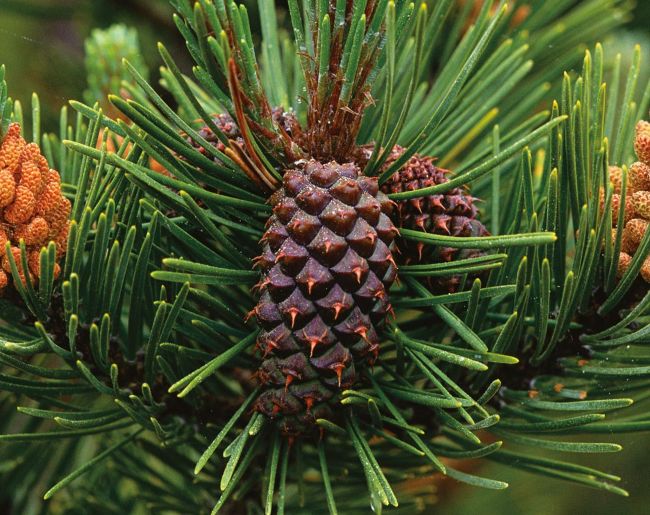
WHAT ARE PINECONES? ARE THEY LARGE SEEDS?

Pinecones contain the reproductive structures of the tree. A female cone produces seeds and a male cone produces pollen. The female cone is the large woody one that people are more likely to be familiar with. Its scales become seeds when fertilised from pollen from the less conspicuous male cones. The male cones are very similar among all species of conifers, whereas the female cones are more varied, making them the ideal way to identify the species. Pinecone scales overlap each other like fish scales to protect the seeds.

Did you know? There are around 360 purebred dog breeds

HOW DO OWLS TURN THEIR HEADS?

Owls have extremely large eyes that are fixed in their sockets. This, combined with the fact that their eyes are forward-facing, means that they have to rotate their heads to scan around. Overall, owls can move their heads through about 270 degrees. However, it’s a myth that they can rotate their heads further than other birds. Most birds have extremely flexible necks, which is essential for stabilising their heads in flight.

Unlock this article and much more with
You can enjoy:
Enjoy this edition in full
Instant access to 600+ titles
Thousands of back issues
No contract or commitment
Try for 99p
SUBSCRIBE NOW
30 day trial, then just £9.99 / month. Cancel anytime. New subscribers only.


Learn more
Pocketmags Plus
Pocketmags Plus

This article is from...


View Issues
How It Works
Issue 177
VIEW IN STORE

Other Articles in this Issue


WELCOME
WELCOME
Issue 177
REGULARS
Deploy the decoys
© Alamy An American Air Force AC-13OU gunship
Silk spinners
© Getty Thes are the tiny structures that
Anemonefish embryos
© Getty This sea of fish eyes is
Fiery protostar
© NASA, ESA, CSA, and STScI, J. DePasquale
‘Runaway’ black hole caught speeding through space
GLOBAL EYE
NEW STAR-MAPPING TECHNIQUE FINDS A GIANT EXOPLANET
The newfound exoplanet HIP 99770 b is seen
Scientists discover the first ‘neutron-rich’ isotope of uranium since 1979
Scientists have discovered and synthesised an entirely new
An ultra-rare ‘double quasar’ is spotted by Hubble
An artist’s illustration of two brilliant-blue quasars about
WOOLLY MAMMOTHS WEREN’T ALWAYS SHAGGY
Woolly mammoths evolved to have fuzzy coats and
Nearly 150 cartilage genes may control human height
Cells that make up the cartilage at the
A 30,000-year-old fur ball is actually a mummified squirrel
An unrecognisable ball of fur, claws and limbs
CHINA REPORTS THE FIRST HUMAN DEATH FROM H3N8 BIRD FLU
Avian Influenza A (H3N8) is a subtype of
The second-oldest orca in captivity is finally getting released
Miami Seaquarium’s star orca, Lolita, who has spent
The smallest and largest animals make up most of Earth’s biomass
Scientists have spent five years classifying the size,
Man catches ‘silver leaf’ tree fungus disease
The fungus behind a plant disease called ‘silver
EUROPE PREPARES THE DARK MATTER-HUNTING EUCLID SPACECRAFT FOR LAUNCH
Technicians at a Thales Alenia Space facility in
WISH LIST
The latest MUSIC GADGET tech
THE LIBRARY
The latest book releases for curious minds
BRAIN GYM
Give your brain a puzzle workout
MAKE EXPLODING PAINT BOMBS
Practical projects to try at home
INBOX
Speak your mind
FAST FACTS
Amazing trivia that will blow your mind
PAPER REVOLUTION
SPECIAL
Cats vs dogs
How the psychology and biology of the world’s most popular pets compare
Family tree
Discover the closest living relatives of cats and dogs
MEET THE PET GENETICIST
Kennel Club genetics research manager Dr Joanna Ilska sheds some light on how dog breeds are defined
Comparing companions
The physical similarities and differences between cats and dogs
Cats and dogs by numbers
ENVIRONMENT
THE OLDEST PLANTS IN THE WORLD
Discover the trees, flowers, shrubs and clonal colonies with deep roots in our planet’s history
Mojave Desert, California
DID YOU KNOW? Individual trees in the H
HOW MARINE ANIMALS SLEEP
The ways whales, sharks and other sea creatures get a good night’s sleep
HOW FOG FORMS
When water vapour turns to liquid, a murky mass fills the air
SPACE
The future of SPACE TRAVEL
Discover possible future spaceship technologies, from the practical to the far-fetched
COLONISING SPACE
Tim Marshall is the author of The Future of Geography: How Power and Politics in Space Will Change Our World
TECHNOLOGY
INSIDE A PINBALL MACHINE
Plunge into the engineering of this popular arcade classic
EYE TRACKING EXPLAINED
How and why electronic devices employ technology to follow a user’s line of sight
HISTORY
How to capture a MEDIEVAL CASTLE
From demolishing walls to starving out defenders, a siege in the Middle Ages required innovative tactics, stamina and determination
CHOOSE YOUR WEAPONS
With money to burn and a realm to conquer, barons would splash out on the biggest and best siege engines available
LAUNCH THE ATTACK
When negotiations failed and intimidation proved futile, siege was the only option
HOW TO DEFEND A CASTLE
When the attackers were on your doorstep, these measures could get you out of trouble
WHAT TO DO WITH THE ENEMY
With the outer walls down, it was time to storm the courtyards and break into the keep
WHO INVENTED MONEY?
From the first coins to cashless transactions, discover how money has shaped our world
THE EVOLUTION OF COINS
Explore the world’s metal money that’s dictated wealth over several centuries
STEPHEN HAWKING
The theoretical physicist who changed the way we see the universe
TRANSPORT
CAR CRASH ANATOMY
How today’s technology can predict, prevent and assist in dangerous vehicle collisions
CAR BRAKES EXAMINED
How fluid dynamics keeps cars from crashing
SCIENCE
WHAT MAKES THINGS BIODEGRADABLE?
The chemistry and biology behind the natural breakdown of organic matter
WHAT IS MUSCLE MEMORY?
How neural shortcuts in your brain make practised activities feel familiar
Chat
X
Pocketmags Support