INSIDE MEDIEVAL HOMES
Step inside the grand designs of the Middle Ages and discover what life was like
WORDS SCOTT DUTFIELD
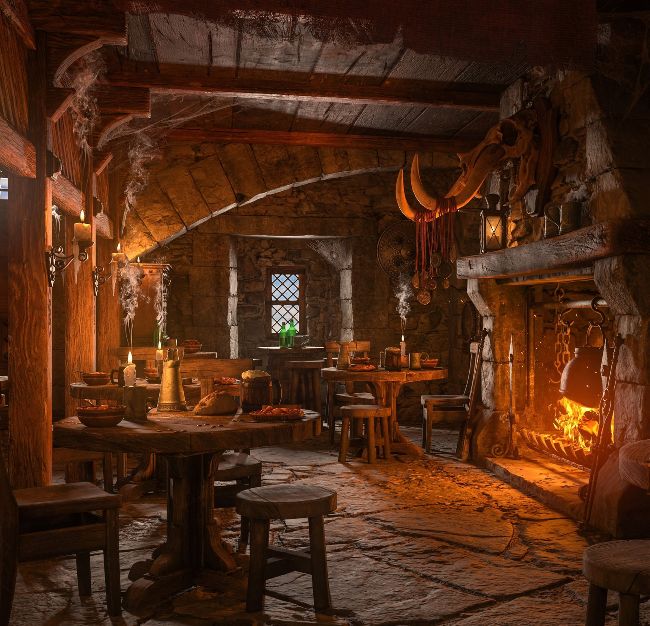
© Getty
Following the fall of the Roman Empire, Europe was propelled into a new era commonly known as the medieval period, or the Middle Ages, which lasted until around 1500. Without emperors to dictate society, new feudal systems slowly emerged throughout the continent, where kings would bestow land and residences on nobles and lords, and ultimately the creation of the early class system was born. With that came a new way of life for different people.
At the bottom of the social ladder were peasants, also known as serfs, who lived in the most desolate of conditions. During the early medieval period, peasants’ homes were made of sticks and earth. Heat and a means of cooking food were provided by a fire, the smoke from which would billow through the thatched roof. These often single-room occupancies were sparsely furnished, with straw beds usually shared with livestock. Life as a serf during the Middle Ages was profoundly impacted by the movement of the Sun. Those who lived in basic homes were not able to live by expensive candlelight, instead resorting to the fleeting illumination of a rushlight. To make a rushlight, a long stick from a rush plant was dipped in spare animal fat, called tallow, and lit so that it burned horizontally. Unlike the hours of light a wax candle can provide, these homemade lights would burn for less than an hour.
Did you know?
Prague Castle covers around 70,000 square metres