WHY ANIMALS SHED
What prompts some creatures to regularly lose their old outer layers and replace them with fresh new skin?
WORDS SCOTT DUTFIELD
Many creatures throughout the animal kingdom undergo a process of physical transformation called moulting.
Whether they create ghostly serpent sleeves as a result or just ditch clumps of old skin and fur, shedding is an important stage in an animal’s growth and survival.
The terms moulting and shedding are often used interchangeably, but there’s a slight difference between each process. Moulting is the removal of an animal’s entire skin, feathers, shell or exoskeleton as it grows, which often occurs on a seasonal basis. For example, elephant seals (Mirounga leonina) undergo what is known as a ‘catastrophic moult’ during late summer. As dramatic as it sounds, the ‘catastrophic’ nature of these moults merely relates to the large patches of skin that shed at one time.
DID YOU KNOW?
Large reticulated pythons can shed a skin around 6.25 metres long
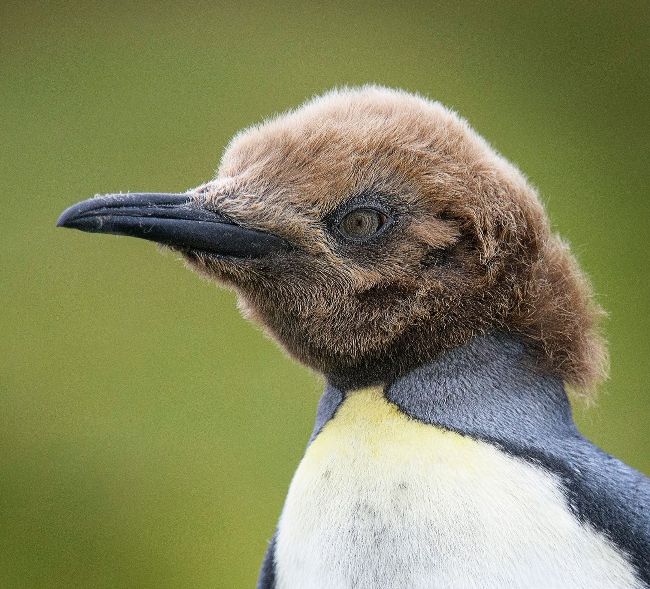
After around 30 days, king penguin (Aptenodytes patagonicus) chicks moult their juvenile feathers
Did you know?
Canadian geese have around 25,000 feathers on their body
AHUMAN’S BEST HYPOALLERGENIC FRIEND
Along with a heap of excess fur to clean up, being around a dog that likes to shed its fur can trigger human allergies. Siberian Huskies, for example, are some of the heaviest shredders in the canine world. This is mainly due to their role as sled dogs in cold climates, as shedding helps maintain their thick, healthy coats. But what’s good for plummeting temperatures can wreak havoc on their owner’s nose. When dogs shed, they also shed skin cells. These can find their way into the nostrils and mouth of the owner, triggering the body’s immune system and causing allergic relations. However, many dog breeds, such as the Afghan Hound and Giant Schnauzer, have been deemed hypoallergenic. This means that while no dog is completely free from shedding, some shed at such a low level that allergic reactions can be avoided.