12 SECRET UNDERGROUND STRUCTURES
Discover the hidden worlds carved out of the ground across history
WORDS AILSA HARVEY
DID YOU KNOW? Petra is also known as the Rose City due to the colour the sandstone appears at sunset and sunrise
Did you know?
In 1884, Llechwedd produced 23,788 tonnes of slate in a year
CAPITAL CITY CARVED FROM ROCK
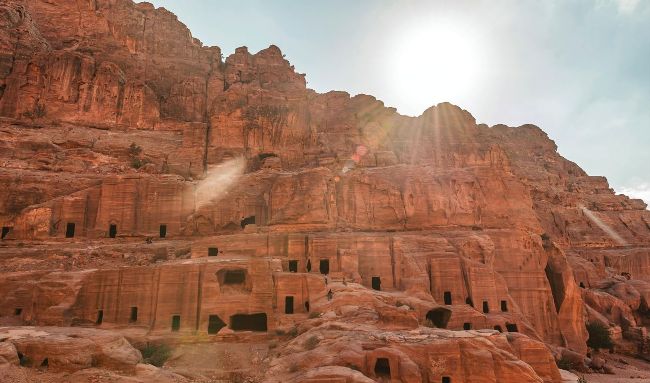
Petra covers an area the size of 50,000 footballs fields
Between 400 BCE and 106 CE, Petra in Jordan was the capital of the Nabataean Kingdom. The Nabataeans were an ancient Arabic tribe, 20,000 of whom lived in the cliff-carved city of Petra. Inside this sandstone metropolis is a hidden maze of monuments, tombs and intricate dwellings. Historians believe that only around 15 per cent of Petra has been uncovered by archaeologists so far, while 85 per cent of the city's contents remain a mystery, their secrets still buried deep underground.
The Petra community thrived, sheltered by the desert cliffs and situated along a main trade route between Arabia, Egypt and the Mediterranean Sea. Channels were carved into the city's walls to supply water to all corners of the city, while extra water was collected in cisterns to serve the Nabataeans during the drier seasons. In 363 CE the creatively carved city was largely destroyed by an earthquake. Many of the chambers were ruined, and the true extent of the city was lost in the sandstone for hundreds of years.