EXPLORING THE PACIFIC
Hop aboard the ancient sailing vessels that carried new nations across the ocean
WORDS SCOTT DUTFIELD
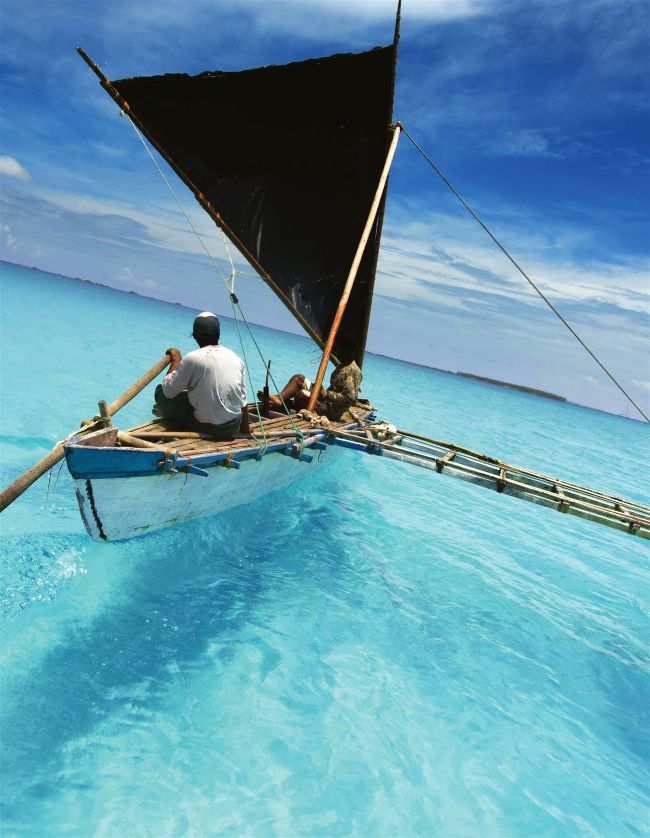
© Alamy / Shutterstock
A round 3,000 BCE, groups of people began their historic voyages from southeast Asia and Pacific islands such as New Guinea to discover the wealth of tropical islands dotted around the Pacific Ocean. Their first stop was the Solomon Islands, then the Vanuatu archipelago, before reaching the Fijian islands, Samoa and Tonga by around 1600 BCE. From there, voyagers sailed to eastern Polynesia and the Cook Islands by 300 BCE before venturing thousands of miles northwards to discover Hawaii around a hundred years later. The expansion of Polynesia ended around 1000 to 1250 CE when voyagers made their way to Aotearoa, now known as New Zealand.
DID YOU KNOW? Māori voyagers first reached New Zealand around 1,000 years ago
We may never know the exact reason why the first Polynesians immigrated, although it’s been suggested that competition for resources by other ancient civilisations, expulsion from their homelands or just good old-fashioned curiosity may have been the catalyst. What we do know is how they managed to cross thousands of miles of open water to discover what is now known collectively as Polynesia. To brave the unforgiving Pacific waters, early travellers boarded sailing canoes. Melanesian people of Fiji refer to them as drua, Tongans use the term kalia and the Samoans know them as ‘alia, but what they all share in common is their design. These double-hulled sailing canoes were constructed from planks of native wood to form the boat’s keel (underside) and its main body. Wood was bound together using coconut fibres and often glued together using the gum produced by plants such as the breadfruit tree. Some of these canoes spanned over 30 metres and carried as many as 100 people.