PART ONE
DOGS OF WAR
THE MAKING OF THE WILD GEESE
“Their home is the battlefield. Their calling is war. Their only loyalty is to each other. They are The Wild Geese – the best **** mercenaries in the business.” More than 40 years after The Wild Geese exploded onto cinema screens, Tony Earnshaw revisits the mother of all mercenary movies.
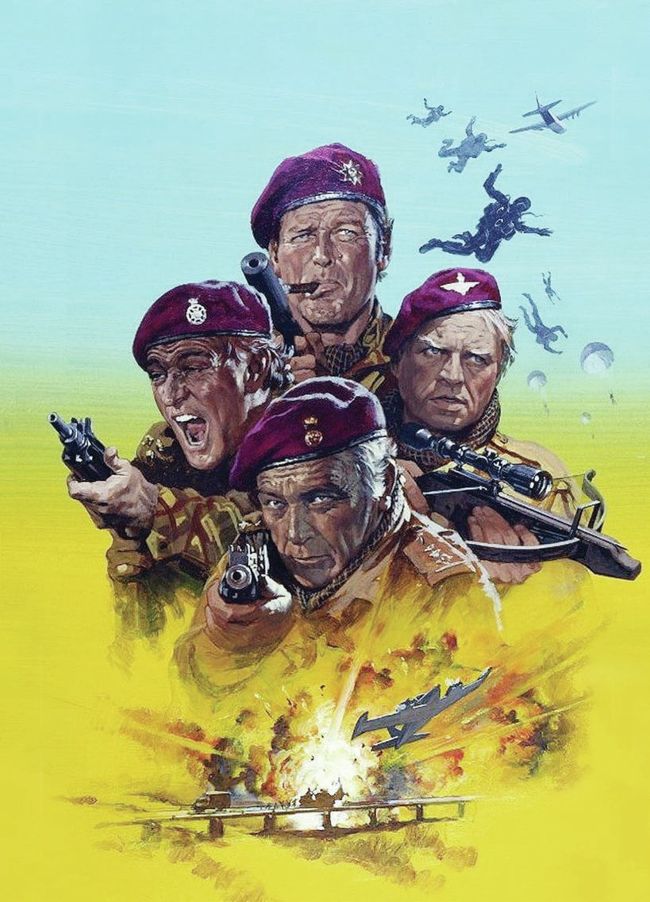
The Wild Geese poster art by Arnaldo Putzu
Alone mercenary weaves his way through the African bush. Close behind, their approach frighteningly loud, a squad of bloodthirsty Simbas crashes through the undergrowth, steadily gaining ground on their quarry. It is a life or death moment. With seconds to spare the mercenary piles into the overhanging branches of a nearby tree, then flings himself to the ground. Moments later he unleashes a merciless, murderous fusillade of fire followed almost immediately by a grenade, which explodes with devastating effect. As bodies crash to the earth the sounds of battle die away. A voice breaks the mood: “Cut. That’s a print. Thank you, Richard.”
The mercenary drags himself to his feet. His beret bears the cap badge of the Welsh Fusiliers. His uniform denotes his rank – that of colonel. His face is unmistakable: he is acting legend Richard Burton, and today has been a tough shoot. It is 120 degrees in the shade in Tshipise, Northern Transvaal, and Burton’s hand reaches out for a cold drink. For this old soldier, war is over for the day. Battle will recommence tomorrow in the burning African sun as Burton, playing Colonel Allen Faulkner, leads 50 mercenaries in a desperate do-or-die fight for a blockbuster called The Wild Geese. In the pantheon of war films The Wild Geesestands head and shoulders above the majority. This year it celebrates its 44 thanniversary. With the majority of its cast now dead – Hardy Hardy Krüger left us in January – the time has come to reconsider one of the great action classics of the 20 thcentury and its bloody roots in the heart of darkest Africa.