HERE THERE BE DRAGONS
Mike Hankin recalls George Pal’s The Wonderful World of the Brothers Grimm, a fairy tale epic in glorious Cinerama!
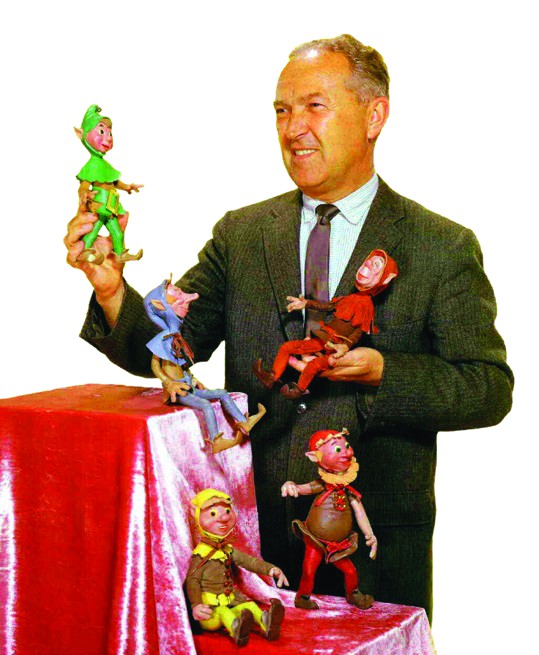
George Pal with the film’s elves
Rightfrom the beginning it seemed like a difficult, if not impossible proposition: using a technically laborious filming system for a dramatic presentation. Regular television transmissions in the late 1940s and early 50s began to have an effect on the revenue studios were earning from motion pictures, so something new was needed to draw audiences back into the cinemas. This had to be something with which the small black and white image issuing from a box in the living room couldn’t possibly compete. It would seem that colour had not been enough, its increased use hadn’t prevented the decline in audiences.
Experiments in the use of wide-screen presentation had been around for nearly as long as the beginnings of cinema. For instance, as part of 1927 innovative silent epic Napoléon, directed by Abel Gance, a few sequences created a panoramic effect by filming with three synchronised cameras, followed by three projectors throwing the images on to three side-by-side screens. As startling as this presentation must have been, at the time it was considered just an expensive gimmick. Then, along came one set of filmmakers who thought they could go one better, by enveloping the audiences’ field of vision with sights and sounds to give them thrills that very few would be able to experience in the normal course of their lives. Cinerama is a system utilising three synchronised projectors and a curved, louvred screen, invented by Fred Waller, a technical genius while he was working in the special effects department at Paramount Pictures in the late 1940s.
This was something that Waller had been experimenting with for a while, having previously designed a multiprojector exhibit called the Perisphere for the New York World Fair in 1939, as well as creating a hugely successful simulator for gunnery training during the Second World War that employed five projectors.
To get his system operational, Waller first found backing from Mike Todd, better known as a theatre producer at the time. Although initially intrigued by the ultra-wide screen process, Todd would soon move on to work on his own 70mm single lens and sound system with the American Optical Company that would eventually bear his name, Todd-AO. Within a few years he would be the driving force behind one of the most talked-about films of the 1950’s, which is known as (to the detriment of the actual author of the story, Jules Verne), Mike Todd’s Around the World in Eighty Days (1956). The next partner was Lowell Thomas, known primarily for his work on radio and as a travel correspondent, but also forever linked to T. E. Lawrence (Lawrence of Arabia), after giving a series of lectures on the famous soldier after meeting him and then following him on some of his exploits during the First World War.