HUNTING HUMANS
Greg Kulon looks back at the making of The Most Dangerous Game, a 1932 pre-code classic which helped set the stage for RKO’s even more famous King Kong...
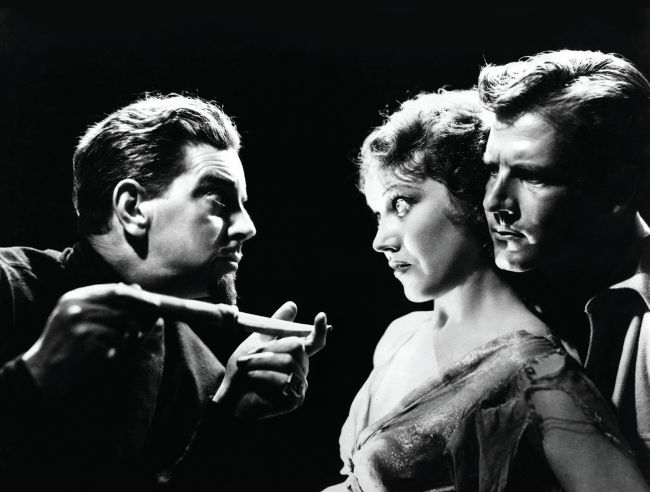
Leslie Banks, Fay Wray and Joel McCrea in The Most Dangerous Game (1932)
The RKO publicity department wasn’t shy about promoting its new film to theatre owners. “Once in a blue moon, a startling picture crashes through... striking, because it is different... enthralling because it is new. When it does, the entire industry is agog... sometimes surprised and puzzled as to just how it all happened. Advertising departments grope for and grapple with new words, situations, selling points’.. theatres must conceive new ballyhoo.”
The trade booklet would continue “David O. Selznick has brought about just such a situation... with an amazing picture, THE MOST DANGEROUS GAME.”
In October 1931, David O. Selznick became the production chief at RKO. The young Hollywood mogul had been without a job since the summer, having left Paramount Pictures while trying to finance his own production company. He accepted the job at RKO after he realised that starting his own company was too big a leap in the depressed economic environment. At RKO, Selznick wanted a new structure for the company, with more control of the product held by the producers themselves, replacing the usual studio limitations held at the executive level. He also wanted to produce more product at a reasonable cost rather than swing for the home run with big budget films.
Prior to accepting the job, he had already been coordinating with a proven filmmaker who could tell a story with a reasonable budget. This man, Merian C. Cooper, had been helping Selznick with financing opportunities and had also referred him to the job at RKO. The month before accepting the RKO job, Selznick had contacted Cooper about evaluating the projects that were in various stages of production. Cooper was tiring of his desk job as an aerospace executive in New York and was looking for something exciting to do. He had developed an idea for a gorilla picture, and he was looking for Selznick’s support along those lines when he followed Selznick to RKO late that year.
Selznick in turn was interested in Richard Connell’s 1924 short story “The Most Dangerous Game” as an early possibility for a thrilling film that could be quickly made on a reasonable budget. Connell’s O. Henry award-winning story is a quick read with a straightforward plot.
While en-route to a hunting expedition in the Amazon on a private yacht, big game hunter Sanger Rainsford hears shots in the night coming from an island which has filled the local sailors with dread over the years. Unfortunately for Rainsford, his aroused curiosity draws him to the edge of the boat when he accidentally falls in the water, an event unnoticed on the yacht which is rapidly passing him by. Rainsford makes it to the island to find the château of Cossack General Zaroff. Here he learns Zaroff is a master hunter who had become bored by hunting traditional animals, only to find a new, more challenging game in hunting an animal that can reason. All too soon Rainsford will find out first-hand what this game is.
Given Cooper’s reputation to be able to pull off films cost-effectively, Selznick assigned the Connell story to him. Cooper, in turn, had planned on having noted mystery writer Edgar Wallace do the screenplay. Wallace had secured a three-month contract with RKO and planned to make his way to Hollywood to try his hand at the film business. It was expected that his ability to plot and write quickly would be quite lucrative in Hollywood. Wallace began his long journey by boat and continued via train across the continent, finally reaching Hollywood on December 4th, 1931.
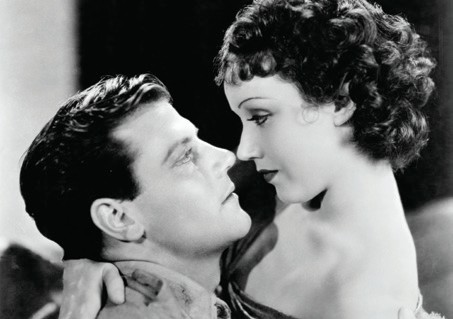
Joel McCrea and Fay Wray;
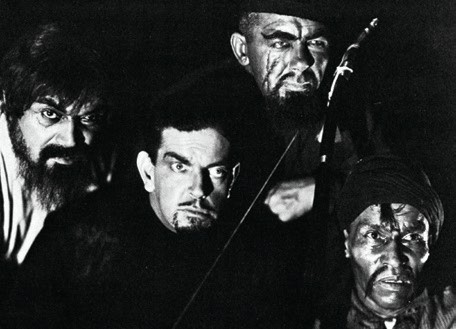
Leslie Banks with his motley crew, Oscar ‘Dutch’ Hendrian, Noble Johnson and Steve Clemente;
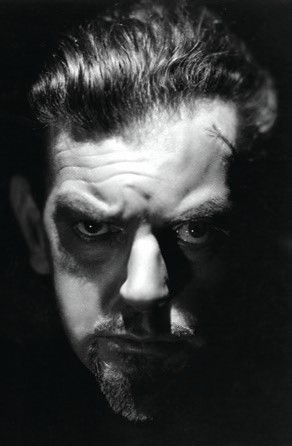
Leslie Banks as Zaroff;
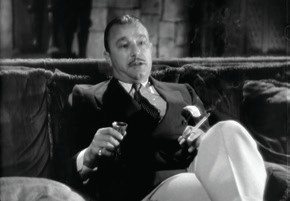
Robert Armstrong
EXIT EDGAR
Things would not go as planned for Wallace on his trip. Shortly after arriving, Cooper had begun talking to Wallace about his planned prehistoric picture. By the end of December, Wallace was writing the initial screenplay for King Kong (1933) under the working title “The Beast”. Cooper had been given a partial go for the project, but only enough funding to work the story and prepare a test reel to show that his ambitious plans for a giant gorilla living on an island of prehistoric wonders was achievable.