Tommy Sheppard
Stand-Up
by Robbie Dinwoodie
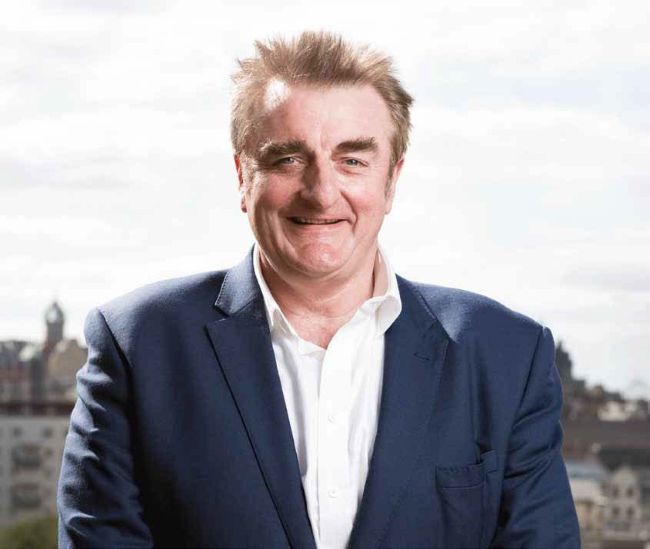
Philip Stanley Dickson
THERE is a recurring theme in politics that we must bemoan a time when our elected tribunes ceased to be rounded humans with a decent back-story and morphed into youngsters who were born into and never left the political village
You could never quite have said that of Tommy Sheppard, given his intriguing Ulster origins, but at one stage his political insider trajectory was almost a clichéd version of that type … university politics, the Labour Party, the National Union of Students, councillor, working for the party machine, then a Westminster career. Somewhere between the penultimate and final parts of that curriculum vitae Sheppard’s political career took some strange turns … a falling out with the Labour Party, the building of an acclaimed comedy club business, and a political reawakening during the independence referendum campaign … which make him an all the more interesting figure.
He admits that a left-wing republican turning his back on the beliefs of the Ulster Protestant community could be seen as a “betrayal” and speaks of how he was once dubbed “grit in the Blairite machine” before his later return to politics and meteoric rise through the SNP saw him become a creditable second in the recent deputy leadership contest.
Sheppard’s political career took some strange turns … a falling out with the Labour Party, the building of an acclaimed comedy club business, and a political reawakening during the independence referendum campaign … which make him an all the more interesting figure.
When we meet in a fine wee cafe in Portobello High Street, across from his Edinburgh East constituency office, I know most of the Sheppard career, having covered much of it, but not his origins, which I was only vaguely aware of. Knowing he was born in The Heights, a council scheme in Coleraine, I asked him about what press cuttings now describe as “a Catholic enclave” and he is puzzled, because that’s not how he remembers it at all in the early 1960s, in as much as any of us recall the earliest years of our lives.