How to insulate walls
Getting insulation right is a key part of any building project. Mike Hardwick explores the main options for treating new walls
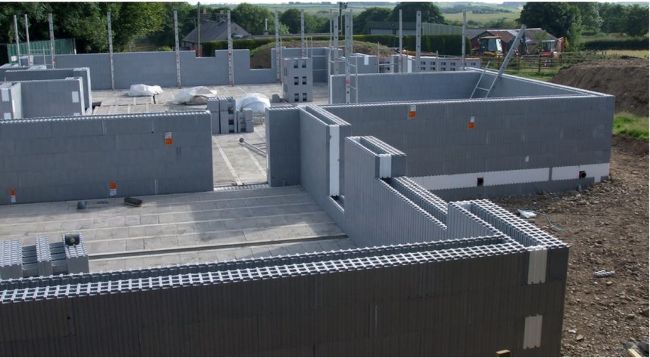
The Beco Wallform ICF system uses insulating blocks as a permanent formwork for a concrete pour – giving you built-in thermal protection
One of the common misconceptions about conventional brick and block construction is that the gap between the inner and outer leafs was designed to accommodate insulation. In fact, cavity walling was developed as a way of preventing moisture penetrating porous brick or stone and damaging the structural fabric. It does this by providing a space for water to safely drain away.
It’s only in relatively recent times we have thought about filling the cavity with insulation in order to improve thermal performance. Even as late as 1996, houses could be built without insulated cavity walls that achieved a measly U-value (a measure of heat loss) of just 0.6 W/m2K.
Thankfully, Building Regulations have tightened up considerably and, as of 2014, Part L sets a suggested target of 0.18 W/m2K for walls in new domestic properties (which can of course be constructed using a range of systems). These may seem small numbers, but they represent a vast difference in thermal performance. However, it’s not just a case of aiming for a specific U-value. The complex Standard Assessment Procedure (SAP) calculations used to determine compliance with Part L of the regs allow some flexibility, so you could possibly get away with a wall U-value of 0.30 W/m2K if you compensated for this relatively poor performance elsewhere in the build.