Guide to building an eco home
Chris Bates takes a look at how the main building systems fare in some of the core aspects of creating a low-energy, low-bills home
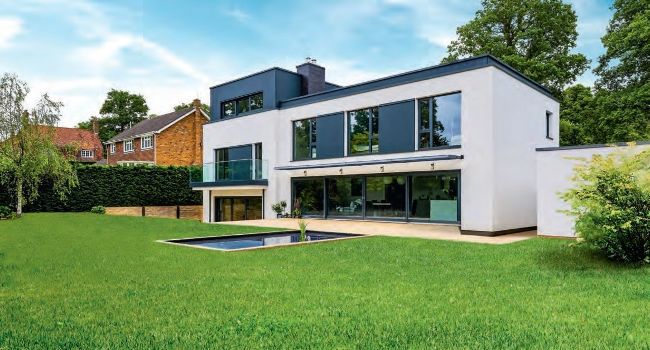
This 470m2 timber frame project by WeberHaus includes a raft of eco features, including a mixture of mineral wool and wood fibre insulation, triple glazed windows and renewable heating systems
Speak to any one of the experts at our Build It Live shows about constructing a sustainable property that doesn’t cost the earth to run, and you’re likely to hear the phrase ‘fabric first’ as part of their reply. That’s because, alongside careful design and good workmanship, a high-performance structural envelope is one of the key components when it comes to keeping energy usage to a minimum. Get this element right and you’ll reap the benefits for years or even decades to come – and the good news is, upgrading the fabric is frequently the most affordable way to make a project more eco-friendly. Of course, every building system is different – so how do they compare on different aspects of sustainability? Here’s what you need to know.
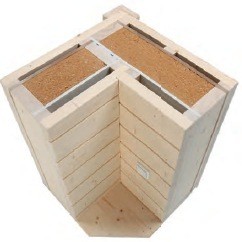
Stommel Haus builds its projects using natural, untreated timber panels filled with eco-friendly rockwool insulation – creating airtight yet breathable walls
Insulation
Achieving good thermal efficiency by insulating the fabric of your home isn’t exactly a new idea, and today’s Building Regulations set a decent underlying standard for new houses. Walls must attain a U-value (a measure of heat loss through structural elements) of 0.30 W/m2K or better – but in practice most developments will need to achieve 0.18 W/m2K or lower to pass overall. And a key step to doing that is to get the insulation right.
This is pretty straightforward with most structural systems. On a masonry build you’ll typically use cavity wall construction – whereby a gap is left between an inner leaf of blockwork and an outer skin of brick. Filling this with a 150mm thickness of Rockwool or 100mm of rigid insulation should net you a U-value of 0.18 W/m2K; with an overall wall thickness of around 300-350mm.
With timber frame, the insulation is usually fitted in the factory under quality-controlled conditions. Typically, you can achieve the same U-value with a thinner overall wall thickness than standard masonry – so there’s potential to gain internal floorspace. The same applies to structural insulated panels (SIPs), which can also be used to form the roof structure (thus giving you a pre-insulated loft void). For an in-depth guide to insulating a timber frame building, check out Tim Doherty’s feature on page 109.
If you’re using green oak, post-and-beam or steel frame construction, then the main structural shell will almost certainly need be wrapped with insulation externally to form a continuous thermal barrier. In the case of oak structures, this is usually achieved with SIPs or a similar panelised walling system – which means you can achieve exactly the same level of thermal efficiency as you would with any other construction method.