Insulating a timber frame home
Panel systems offer structural support and energy performance in one, but there are many products – and price points – to choose from. Tim Doherty explores the key benefits and the differences between them
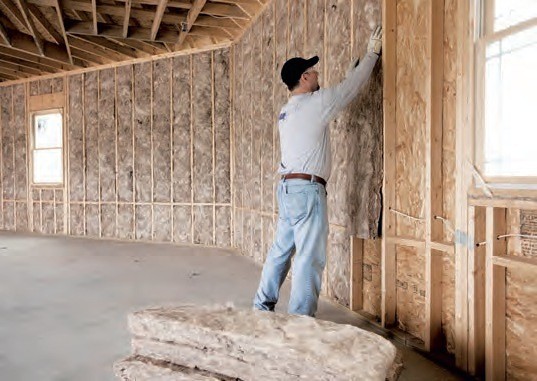
Knauf’s mineral wool insulation being installed between timber studs. If needed, a service void can be battened out
Last month I focused on the energy performance of masonry building systems. This time, it’s the turn of timber frame – and there are some key design differences between the two. Unless you are thinking about solid wall construction, the fundamental distinction between masonry and timber frame is the non-negotiable need to preserve a cavity between the inner timber structural panel and outer cladding skins, which must be kept free for ventilation purposes. With brick-and-block, the gap can be usefully insulated to boost a masonry structure’s performance while attempting to prevent the total wall thickness from becoming too great. That’s not the case with timber frame, where the structural panel does everything: taking load by supporting floors and roofs, providing rigidity to stop the structure from a lateral twist and containing the insulation required for acoustic and thermal performance.
The physical properties of a timber panel are important. The selection and mix of the individual components should be treated much like a formula or recipe – some vanilla, others more exotic, with a staggering range of prices from a big supplier pool all competing for your business.
Panel design components
An open-cell timber panel is made to a given height and usually to a standardised width, with special sizes to suit building dimensions, plus window and door openings. The panel is made from structural timber studs/rails, which form a perimeter frame and include intermediate vertical studs at no more than 600mm centres.