VETERINARY CARE
help fellow enthusiasts!
Just as the veterinary care of reptiles has advanced significantly over recent years, so have the diagnostic tools available, to prevent, identify and treat cases of illness. David Alderton investigates this vital yet often rather overlooked area, and acquires some useful practical tips.
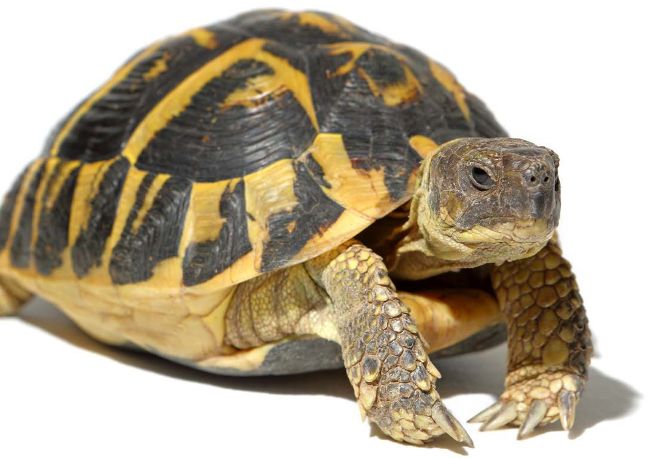
Hermann’s tortoise.
Photo courtesy studio Empreinte/
www.shutterstock.com Tackling everything from aardvarks to zebras, there is very little that fazes the team of biomedical scientists that run the UK’s only independent exotic veterinary diagnostics laboratory. “We started out around 15 years ago, and have recently moved to our new purpose-built premises here in rural Cheshire,” says Mary Pinborough, who runs the business with her colleague Debbie Moore.
Pinmoore Animal Laboratory Services - better-known simply as PALS - receive samples from a wide range of sources, including veterinary practices, zoological collections, private keepers and animal food suppliers. Their laboratory is fully equipped to carry out a wide of tests from haematology (blood studies) and biochemistry profiles right through to professional postmortem services.
“One of the really interesting things I find about this job is the range of work that we undertake,” says Mary, who has been a keen reptile keeper herself for many years, and recently lost her green iguana (Iguana iguana) which she acquired as a youngster some 47 years ago. This could well be a record for longevity in this species!
Leggete l'articolo completo e molti altri in questo numero di
Practical Reptile Keeping
Opzioni di acquisto di seguito
Se il problema è vostro,
Accesso
per leggere subito l'articolo completo.
Singolo numero digitale
Issue 130
Questo numero e altri numeri arretrati non sono inclusi in un nuovo
abbonamento. Gli abbonamenti comprendono l'ultimo numero regolare e i nuovi numeri pubblicati durante l'abbonamento.
Practical Reptile Keeping
Abbonamento digitale annuale
€39,99
fatturati annualmente
Abbonamento digitale di 6 mesi
€21,99
fatturati due volte l'anno