Attualmente si sta visualizzando la versione Italy del sito.
Volete passare al vostro sito locale?
13 TEMPO DI LETTURA MIN

Life, books and arts

Replotting the human

Science is getting nearer to producing babies outside the womb. The moral arguments will need to catch up fast

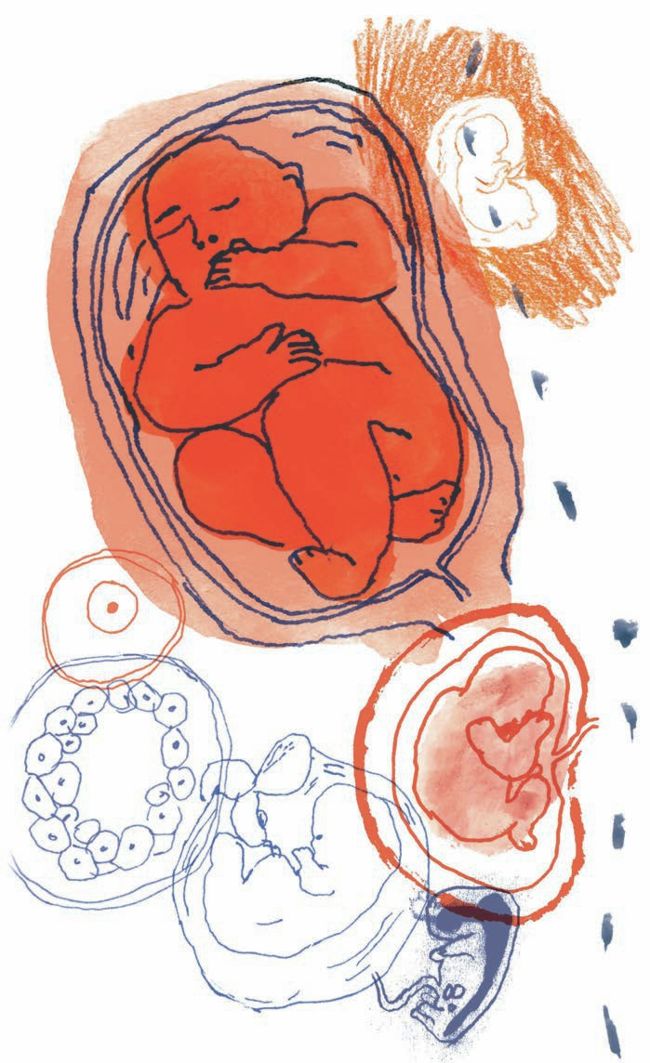
ILLUSTRATIONS BY CHARLOTTE AGER

In its worthy pursuit of what the philosopher Francis Bacon called “the relief of man’s estate,” science has a habit of creating previously unknown moral dilemmas. That’s nowhere more apparent than in the sciences pertaining to the beginning of human lives.

When IVF took off after the birth of Louise Brown in 1978, fertility doctors were faced with the question of what to do with embryos produced “in vitro”—that is, outside the womb—which would not, either because of their unviability or sheer excess in number, be implanted for gestation. Many were donated for embryological research, which has made huge strides as a result. But this has also complicated the already impassioned arguments—still unresolved—about the moral status of the human embryo.

Similar wrangles loom over the recent report in Nature by a team of scientists based in Israel who say that they can gestate mouse embryos in glass jars for up to 12 days. That might not sound long, but it is half a mouse’s normal gestation period: the embryos can reach a stage where the internal organs are in place, the heart is beating, and the hind legs are developing.

By contrast, no human embryos have been grown outside the womb beyond 14 days (the legal limit in the UK, Israel, China and many other countries), which is of course still at a very early stage of the journey towards becoming a baby. But Jacob Hanna, who led the Israeli project at the Weizmann Institute of Science, told Technology Review that it “sets the stage for other species… I hope that it will allow scientists to grow human embryos until week five.”

At the same time, advances in biology are enabling the creation of entirely new types of embryolike structures, which some call “simbryos,” by assembling “from scratch” the embryonic cells of humans and other animals. Because these entities are in some sense “artificial,” though made from ordinary living cells, researchers aren’t sure if they qualify as genuine embryos, and so whether they should fall under the 14-day legal constraint. Meanwhile, scientists in the US and China have recently reported making “chimeric” embryos that contain a mixture of human and monkey cells, which they could keep alive in vitro for up to 20 days.

All these studies are motivated by biomedical questions and needs, from trying to understand the early stages of human development (and what can go wrong, for example, leading up to miscarriages) to trying to grow human organs for transplants within livestock animals. Yet they are also blurring boundaries: between natural and artificial, tissue culture and actual conception, humans and other species. We are, in the words of academic Susan Merrill Squier, “replotting the human”— and, so far, with no moral framework to guide us.

Leggete l'articolo completo e molti altri in questo numero di Prospect Magazine
Opzioni di acquisto di seguito
Se il problema è vostro, Accesso per leggere subito l'articolo completo.
Singolo numero digitale July 2021
 
€6,99 / issue
Questo numero e altri numeri arretrati non sono inclusi in un nuovo abbonamento. Gli abbonamenti comprendono l'ultimo numero regolare e i nuovi numeri pubblicati durante l'abbonamento. Prospect Magazine
ABBONAMENTO ALLA STAMPA? Disponibile su magazine.co.uk, la migliore offerta di abbonamento a una rivista online.
 

Questo articolo è...


View Issues
Prospect Magazine
July 2021
VISUALIZZA IN NEGOZIO

Altri articoli in questo numero


Editorial
Put out more flags
We learned this spring that a version of
In This Issue
Letters
Altered states Feargal Cochrane’s essay (“Unionism, nationalism and
Up front
The high street
We’ve all got a stake in our battered town centres. So give us all a voice in their future, writes Vidhya Alakeson
Money
Whether it’s bullion or Bitcoin, its value always comes down to trust, explains Ben Chu
In fact
In a poll of 2,000 Britons under 30,
Wasps
Although not as cuddly as their honey-producing cousins, nature needs wasps too, argues Seirian Sumner
Silence from court
When should judges make and unmake law? One
Boos from the crowd
The Olympic authorities and the government in Tokyo have failed to bully Japan’s people into submission, writes Lesley Downer
Capital flight
In search of more space and cleaner air, many residents used the pandemic as an excuse to get away from the big smoke. Could the exodus make a lasting dent on London’s booming population? Tom Clark and David McAllister investigate
Essays
Is space exploration worth it?
YES Marcus Chown NO Deirdre Nansen McCloskey YES
From Hartlepool to the hangman
English nationalists have taken charge of the Tory Party, and they are cleaning up. Flag-waving is all very well, but eventually they will need a new populist cause. A referendum on the death penalty is becoming a frightening possibility
Mapping the new nationalism
If, as Chris Mullin argues, a new nationalist
Where the west ends
Centuries of history have taught Poland to be wary of Russia. Its authoritarian turn may slowly change that—and destroy its relationships with everyone else
Europe’s second-rate first lady
Portrait
CONSENT: the dynamite at the heart of the British constitution
Popular sovereignty was always fundamental to our democracy—an old truth the Brexit saga eventually forced us to remember. Forget it again, and we could blow apart the Union
Condemned to be liberal: Why any new British model will struggle to escape the long shadow of hands-off economics
The British economic policy debate feels more open
Do it like Denmark
In her quest for a new social contract, the most diplomatic of technocrats, Minouche Shafik, singles out one nation for special praise— and politely buries the third way
Critical thinking
“I know Biden’s cabinet is interested in my writing”
Michael Lewis has made it his life’s work to tell the stories of the people who saw crises coming. He tells Jay Elwes why the US’s shocking failures on Covid-19 could have been avoided
To know and not to know
Jacqueline Rose on the violence we ignore in everyday life—especially against women— and why we need to plumb the depths of our disordered minds to stop it
An immortal jellyfish
The wispy creature has humanity’s most sought-after secret—and it might not even know it
Two minutes to midnight
Fears of an imminent apocalypse have haunted our imaginations for millennia, finds Peter Frankopan
The imitation game
Of all the novelists writing autofictional narratives, Rachel Cusk is the most original and interesting, finds Miranda France
The Brexit illusions
Michel Barnier’s blow-by-blow account of the UK’s divorce from the EU reveals a litany of misunderstandings and missed opportunities, argues Julian King
Books in brief
Go Big: How to Fix Our World by
Recommends
Classical Alexandra Coghlan © DAVID ILIFF /COURTESY OF SUNDANCE INSTITUTE/COURTESY SCIENCE
Policy & Money
Money report: Economics and investment
Meg Greene The analyst Biden’s great experiment Over
Policy report: Cyber security
It’s the new frontline in defending the nation. So how do we protect it?
Advertorial
Would You Like to Play a Game?
Ever since 1983’s WarGames, cyber security attacks have
Where could today’s mis-educational cookie crumble?
Five tell-tale, horrific signs reveal that: today’s school
HOW WE ESTABLISHED A GLOBAL FIRE SAFETY STANDARD
The UN has ratified the International Fire Safety Standard Common Principles, which RICS was instrumental in creating. While it will take time for governments to implement them, the impact should be felt immediately
CAN THE BRITISH HIGH STREET RISE AGAIN?
The pandemic has brought us closer to home—and it might save our local businesses too
And finally...
The generalist by Didymus
ACROSS 11 In Scotland, long-winded or boring (10)
Enigma & puzzles Arithmagic
At Hagwits School, Winnie the witch was teaching
No ctrl
We invented algorithms. But they may soon be shaping us
Brief encounter
ILLUSTRATION BY NICK TAYLOR What is the first
The housing dilemma
PLANNING AHEAD
What the experts think about our housing dilemma
THE HOUSING TRAP
Politicians and industry know we need to build more homes. Why hasn’t it happened?
LET THE MARKET DECIDE
Less red tape and lower taxes will fix the problem
IT’S NOT JUST ABOUT PLANNING
Why the government can’t just leave the free market to sort out our housing crisis
WHAT MODULAR CONSTRUCTION METHODS CAN DO TO HELP BRITAIN TO BUILD MORE HOMES
In the past, modular construction was beset by set backs—but could things be changing?
IN NUMBERS: BRITAIN’S HOUSING
Expensive and exclusive, figures show homeownership remains a remote prospect for many
FUTURE GAZING: WHAT WILL THE REINVENTION OF RETAIL LOOK LIKE?
Even with the successful rollout of vaccines seeming to offer a glimpse of a post-Covid future, intelligent retailers know that there will never be a return to “normal”
LESSONS FROM GRENFELL
Has enough been done by the government on safety since the disaster and if not, why not?
Chat
X
Supporto Pocketmags