Getting to know you
GREAT FOR BEGINNERS
In the latest installment of her series charting progress on her new plot, no-dig gardener Stephanie Hafferty becomes familiar with the site and soil and continues to fill it with tasty crops
GETTING TO KNOW YOU
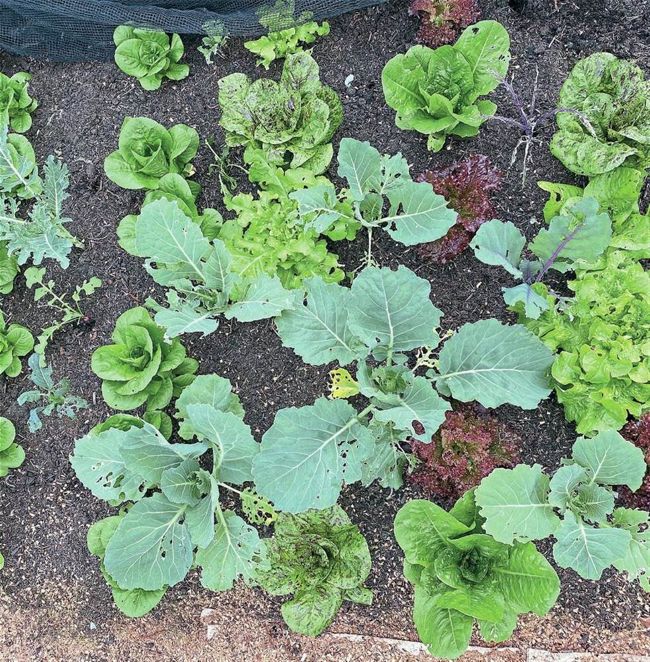
Interplanting (here brassicas and lettuce) saves valuable space
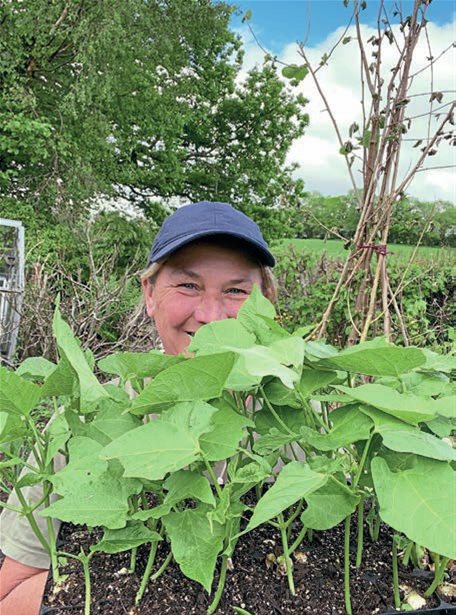
Steph with runner beans started in the greenhouse
It’s surprising how quickly a new no-dig garden can start to look productive. Even though I only started the beds here at the beginning of April, they are filling up with lovely veg, including brassicas, peas, radish and parsnips, which are starting to sprout. To make the most of the space I’m interplanting as much as I can, such as lettuces between brassicas and radish between parsnips.
In early May, summer crops – including squash, beans, tomatoes and courgettes, started in the greenhouse – are almost ready to plant outside in the middle of the month. I keep fleece on standby as protection against any cold nights. It is cooler here on my Welsh hillside than it was in my Somerset garden and having only been here for a few weeks I am not sure what to expect, weather-wise!
LOCATION, LOCATION
There is much to learn and experience in a new garden, especially when the location is so very different. Although Bruton where I lived before is in rural Somerset, it is a small market town, and my garden and allotment were mostly surrounded by housing estates. Here in Wales my neighbours and I are completely surrounded by fields on a hillside with far reaching views over miles to distant mountains. Fortunately, there are plenty of established trees and hedgerows to break some of the wind as it is rather exposed.
I expected slugs to be a potential problem here – they often are in a new garden. The first new-to-me pest I am experiencing here is larger and woollier: sheep! Some of the neighbouring ewes decided that my orchard was the ideal place to take their lambs foraging. They especially enjoyed the pots of fruit bushes destined for the soft fruit patch, munching most of their leaves. Fortunately, a previous resident left a lot of sheep fencing so I was able to make some temporary repairs to the fence and also a sheep fence and an Enviromesh ‘cage’ for the fruit bushes to protect them against any more lambs that may find their way in.