GRASS CLIPPINGS
GREN GOLD
Are you still putting out your grass clippings for garden waste collection? Stop! says Benedict Vanheems. Here are some simple but highly effective ways to put them to fantastic use in the garden or on the allotment
If you have a lawn or grass paths, chances are you’re producing barrowloads of clippings during the growing season. It’s a bit like painting the Forth Bridge – once you’re done mowing it’s only a few more days till you’re out there again, whirring away! Those clippings pile up quickly, don’t they? No wonder it’s so tempting to just put them out for collection.
But take a step back and we can begin to view grass clippings in a whole new light. Those fluffy green heaps are in fact full of nutrients, and free ones at that. With a little imagination they can be put to use all over the garden or allotment, turning that mountain of mowings into mulch, compost or even a liquid feed. Maybe the grass is greener after all!
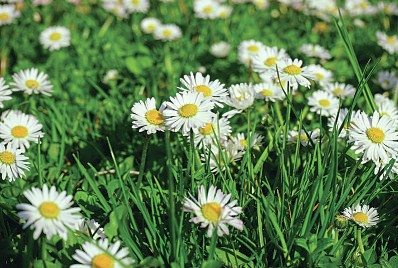
Lawn flowers add to your garden’s biodiversity and the nutrient profile of grass teas
ALL THE TRIMMINGS
So what’s actually in those lawn trimmings and why are they so very valuable to the gardener? Grass is relatively high in nitrogen, along with a host of other nutrients – potassium, phosphorous, as well as trace elements your soil and the plants you grow in it will really benefit from. And the best bit? All that goodness is produced exactly when your garden needs it most: during the growing season.
Over the years I’ve come to think of my lawn not as merely a patch of green, but as a kind of nutrient factory, churning out good things for everything from my veg beds to the compost heap. With the right approach, your clippings can become an essential part of a more self-contained, sustainable garden or allotment.
MOW SHOW
Having a steady source of clippings is fantastic, but that doesn’t mean you need to be mowing every weekend like clockwork. Regular mowing can do more harm than good – to the lawn and the wildlife in it. It’s also not great to mow too close during the likes of the heatwaves and drought we’ve endured this summer.