Introducing… oils
How to paint safely and confidently with traditional and water-mixable oils, by Tim Fisher
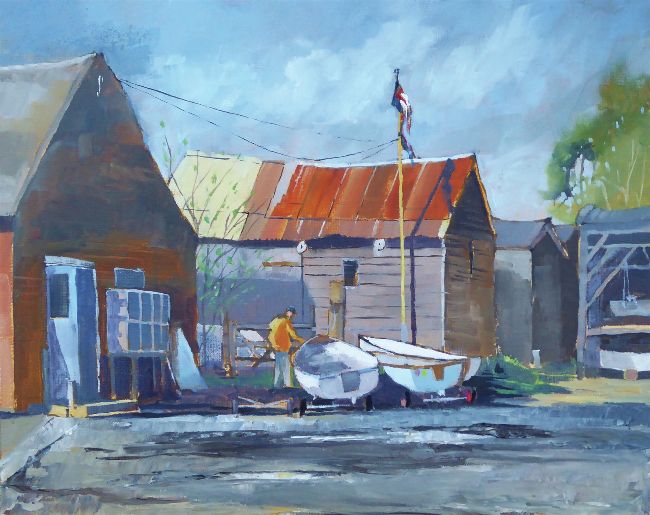
Orford Quay, water-mixable oils on canvas board, 10x12in. (25.5x30.5cm). This was painted en plein air in two sessions using water-mixable oils. I was very much taken with the arrangement of the rowing boats and the cast shadows, especially that of the ragged flag that cast its shadow onto the nearby building. Water-soluble oils offer a convenient solution to working out-of-doors.
Takeaways
• The vast majority of oil paints are non-toxic and easily cleared up.
• Do not dispose of anything down the drain.
• If you can’t work with solvents, try water-mixable oils.
If you like the idea of working with oil paints, it’s worth considering if your chosen medium poses any risk to yourself or your surroundings. Oil paints do not pose a hazard in themselves or give off harmful fumes when used. It is a slow-drying medium that consists of tiny particles of pigment suspended in a drying oil, most commonly linseed, but sometimes poppy or safflower oil. The behaviour or flow of the paint can be influenced by adding some form of solvent. An alkyd medium can be added to change the viscosity of the paint and speed up the drying time. Manufacturers also add stabilisers to prevent the oil separating from the pigment and allow the paint to be stored for long periods of time.
The drying oils used in oil paints are perfectly safe and specially processed food-grade versions of these are readily available through the health food industry. Poppy oil mainly occurs only in paints, although it has been used as a component in some skin care products. The stabilisers are metallic fatty acids, which are well mixed into the paint and do not form any hazard to the user.